Watch CBS News

Gary, Indiana, mayor on storm recovery

A powerful storm sent trees crashing down and knocked out power to thousands in Gary, Indiana, for days. Gary Mayor Eddie Melton shares how his community is recovering, nearly a month later.
10h ago (06:28)

TRANSCRIPT FOR: “GARY'S MAYOR REACTS TO DEVASTATING MASSIVE STORM THAT RIPPED THROUGH INDIANA, ONGOING ISSUES”

ERROL BARNETT:
00:00:00

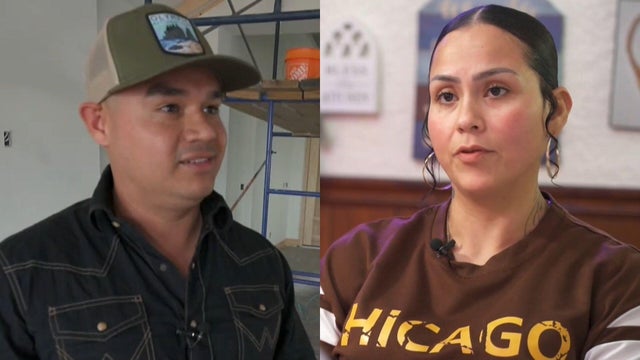
The lights are back on in Gary, Indiana, after a powerful storm caused major damage across the city last month and left people in the dark for about two weeks. We can show you a map revealing the damage reports from that storm across the region. The state dealt with strong winds, flash floods, and large hail. But this is recent footage. The cleanup is still ongoing. Crews have been removing downed trees. And many are passing out meals to those who are still struggling. One of those people is Ernest Walton. He's lived in his house for more than 60 years. And he's trying to figure out how he will get things fixed. During the storm last month, a massive tree crashed through his home. The place is uninhabitable. And the situation is only getting worse as time moves on. We spoke with Mr. Walton, who is deaf, and his daughter, Adanma, who interpreted for him.

ADANMA WALTON:
00:01:00

When you open the door, you see the tree right in our house. Our kitchen is right by our living room. You can see it right in the house. He said, it's heartbreaking. He said, oh, my gosh, the kitchen, that's my mom's house. She loved her kitchen. That was the favorite part of the house. When he had no power, he said his house stunk. He said we just got a tarp over our house. He said it's mold in his house. It stinks. He said he wished he just had equipment to just magically fix his house. He said but he can't.

ERROL BARNETT:
00:01:42

The mayor of Gary, Eddie Melton, is here with us in studio. Mr. Mayor, welcome. Thank you.

ERROL BARNETT:
00:01:47

We spoke with you after this incident. And the story we heard from Ernest is replicated by so many. What do you make of what people are going through? And how are people getting their lives back on track right now? Yeah, well, the power's back on for a majority of the city. But we're still getting back to normal. Two weeks or more, probably about 2 and 1/2 weeks without power, it took a toll on everybody from a mental and psychological state, but also a financial state. And as you can see, Mr. Walton and his family, we've been helping them. We actually just got the tree off his home. But there are hundreds of individuals that still have trees on their homes, on their cars, that the city is literally going block by block, over 50 square miles, helping these folks get back to normal.

ERROL BARNETT:
00:02:35

How much does it cost to clean up your city? And do you have the funds?

EDDIE MELTON:
00:02:39

Well, that's part of the reimbursement process with FEMA. We're currently about 278,000 cubic yards of debris. And that's only about 80% of the city that we've cleaned up so far. We're working seven days a week, at least 10 to 12 hours a day, with a firm called AshBritt that's helping us collect this debris. And folks have easements, they have their personal property, and the utility company as well has property where we're cutting the trees and trying to make sure that it is not a danger moving forward into the future.

ERROL BARNETT:
00:03:13

Now, I didn't realize this, but the type of system, this wall of wind that hit your town is called a derecho?

EDDIE MELTON:
00:03:20

A derecho, yes.

ERROL BARNETT:
00:03:21

Which is kind of like a unique weather phenomenon that had never happened before. And now the utility NIPSCO is being investigated by your state. Just yesterday, the Indiana lawmakers held a hearing about the power issues and the lack of preparation. What do you want to see happen? What do you identify as the real issue for why people didn't have power-- Well, it was an unprecedented storm. 100 mile an hour wind that ripped through Gary, actually, two states, three counties. Devastation throughout every single community. So it wasn't just the city of Gary, Indiana. It was the entire state. Northwest Indiana had the wind damage. Central Indiana and Indianapolis area had the water damage. So you've got to think about climate change and what's taking place in the world, not just in the United States, in terms of the unpredictable weather events that we're seeing-- extreme heat, stronger winters, and as you can see now, these strong windstorms. So I'm hoping through this investigation that we'll know if the utility company is prepared for future events such as this. Is the infrastructure hard enough to endure winds of up to 100 mile an hour or more?

ERROL BARNETT:
00:04:28

You've been in New York City for Climate Week last week. What are you learning or teaching the world about the reality of small towns like yours? Many people were worried that Gary was being ignored because it was without power for so long. And this is happening in many small towns. Well, I would say we're learning a lot right now during this process, the preparedness, the vulnerabilities that we have as a community, making sure that the most vulnerable populations, those without the resources, our senior citizens, those without the means, understand how to be prepared for the storm, what we as a city can and should do better in terms of preparing and saving folks in these type of situations. But as you talk to communities and neighbors, cities across the entire world, folks are concerned on how to prepare and how to better educate. That's why we're looking at various things such as data centers and the impact on utility, the pressure that it puts on the grids. I did a one-year moratorium in the city of Gary to ensure that we're studying this process. As technology advances, we want to make sure that it's done not on the backs of residents as well. So that's part of the conversation that was taking place during Climate Week in New York. So you're connecting, Are towns prepared? with can we really absorb a data center amid all this? So that's fascinating. Mayor, thank you for that. I do want to read the statement we received from NIPSCO, just so that we can get that on the record. They said, quote, "Before the storm, NIPSCO prepared by activating our emergency response plan. Once it was clear the storm was more severe than projected, we brought in additional support and continued to do so as the scale of the damage became evident. We're actively reviewing our response to identify actions that can strengthen our preparedness going forward and are engaging a third-party firm to evaluate our response. We're also cooperating with the IURC's investigation." We want to continue to be connected with you and have you update us on what's happening in your part of the world, Mayor. Thank you so much-- Thank you for having me. --today.

View CBS News In
CBS News App Open
Chrome Safari Continue