CBS
Snipers have changed the face of modern warfare. They have always been a valuable military tool, and they've become even more effective in Iraq and Afghanistan. The U.S. military is training and using them in greater numbers than ever before. To find out why, and to see what it takes to become a sniper, CBS News visited sniper school in Fort Benning, Ga.
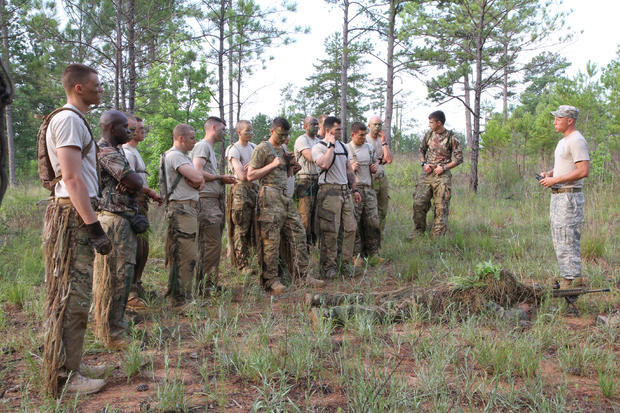
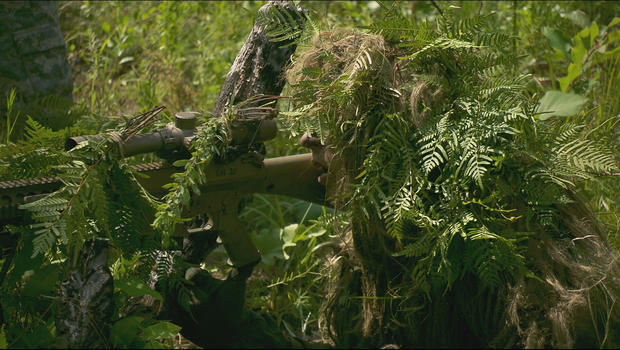
Here, students begin their training and their day learning how to properly camouflage themselves with surrounding vegetation.
CBS
After students learn how to blend in with their local surroundings, they practice "long-form stalk," a three-hour exercise that tests a combination of marksmanship, strategy, and patience.
CBS
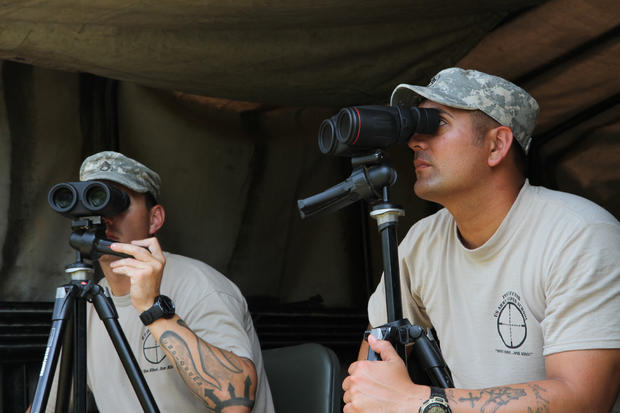
During "long-form stalk," instructors assigned as spotters try to locate and identify student snipers embedded within the hot and humid Georgia woods at Fort Benning.
CBS
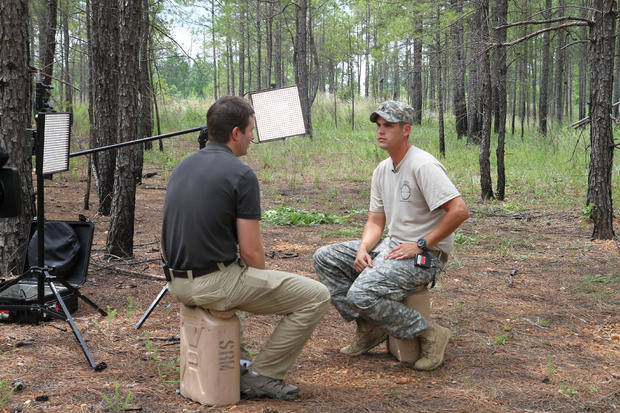
CBS News special correspondent Jeff Glor speaks with Staff Sgt. Michael Haenel, an instructor at Sniper School who relates the patience of sniper stalking to fishing when he says, "You're not just going to throw your line in and get a snag."
CBS
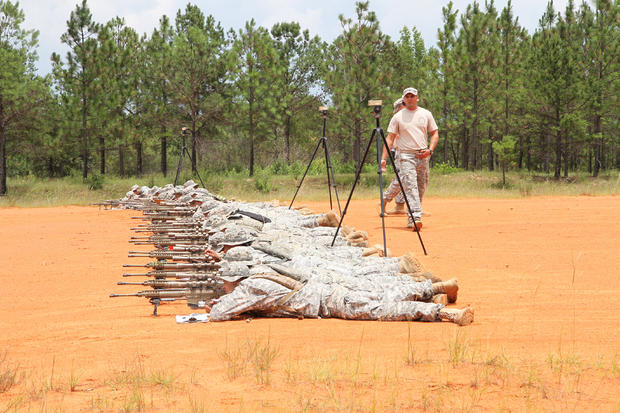
Aiming in the prone position, sniper students engage in "range estimation," calculating the distance to targets placed at different lengths along the course.
CBS
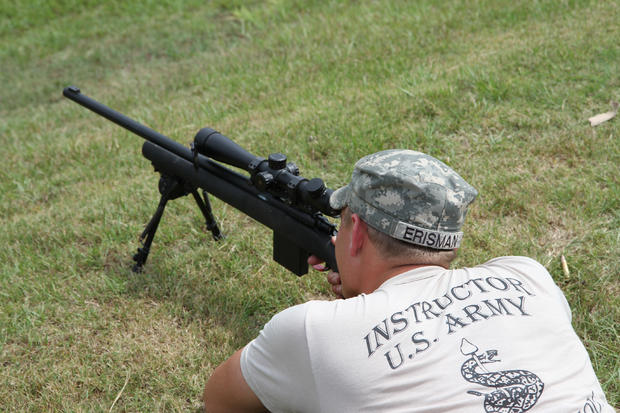
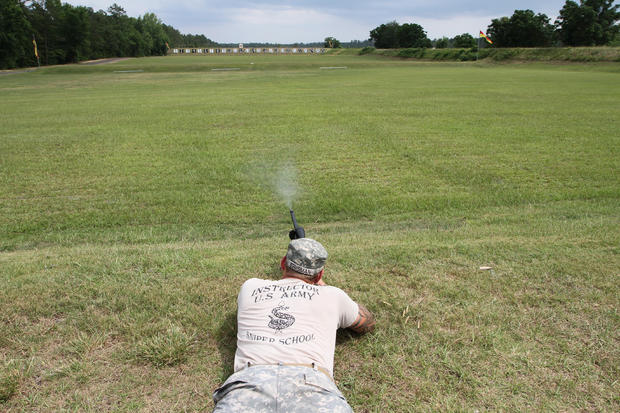
Staff Sgt. Cameron Erisman demonstrates the basic traits that make a professional marksman. Among them are a proper setup to the rifle, steady breathing, a watchful eye, and a patient finger on the trigger.
CBS
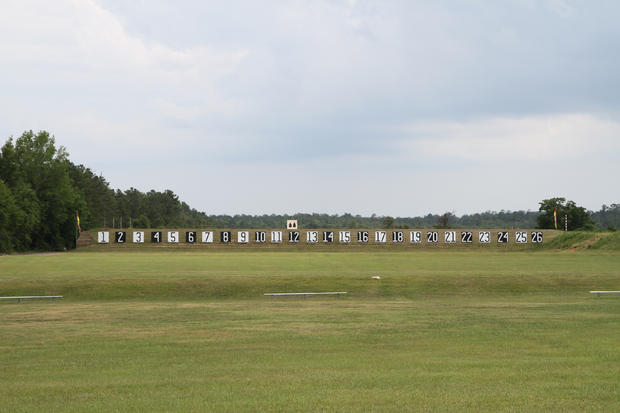
The targets on this shooting range at Fort Benning are represented my two human silhouettes that stand approximately 300 yards away from the marksman.
CBS
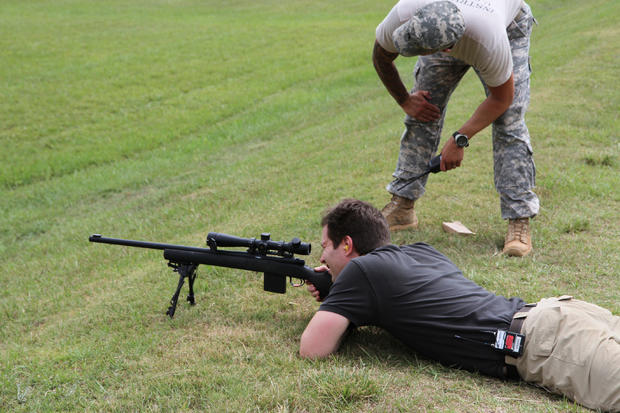
CBS News special correspondent Jeff Glor learns what it takes to make an accurate sniper shot with the M24 sniper weapon system, a bolt-action rifle capable of engaging targets up to more than 800 yards.
CBS
Time and patience are what Staff Sgt. Erisman says make a skilled sniper. Military snipers can, at times, be placed in a position for three or four days before they properly engage a target.