YURI CORTEZ/AFP/Getty
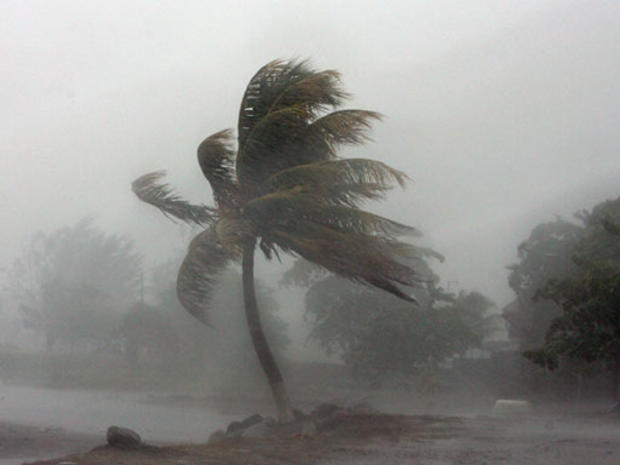
The 2007 hurricane season got even wilder on Sept. 4, with twin storms making landfall on the same day. Felix walloped Central America's remote Miskito coastline and Henriette slammed into resorts on the tip of Baja California. Here, a palm tree is hit by winds near the beach during heavy rain in the city port of La Ceiba, Honduras, as Hurricane Felix approaches ...
AP Photo/Esteban Felix
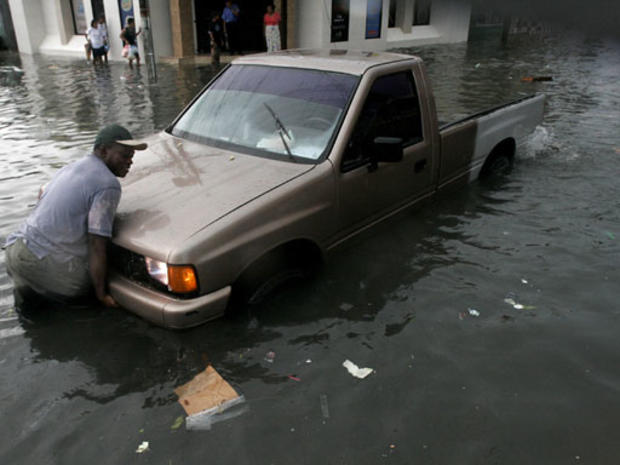
... while in the same city, a man pushes his truck in a flooded street ...
AP Photo/Esteban Felix
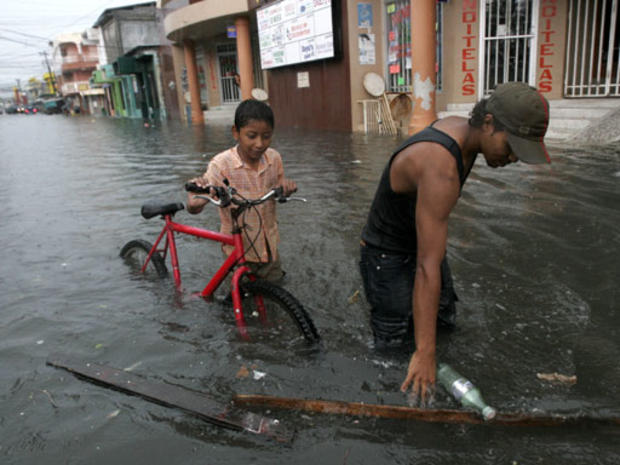
... a child finds his bicycle not very much more useful ...
AP Photo/Esteban Felix
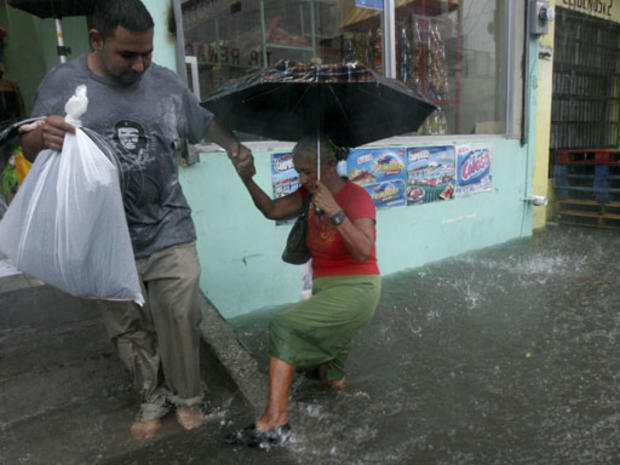
... and even walking requires effort.
GETTY
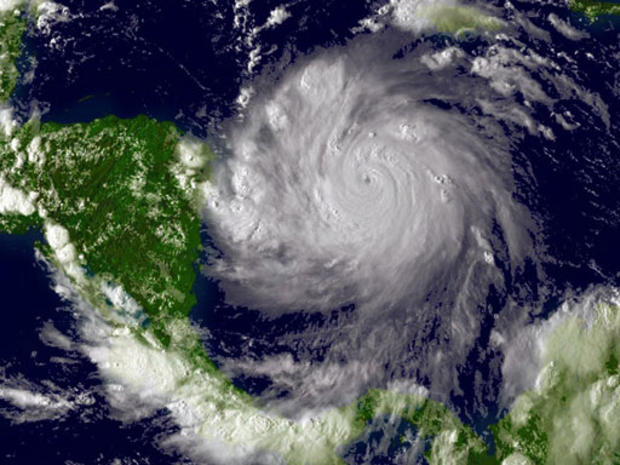
Before it hit land, Hurricane Felix was a Category 5 storm, as indicated by this satellite image provided by the National Oceanic and Atmospheric Administration. It had maximum sustained winds of 160 mph. Felix weakened to a Category 1 storm with 75 mph winds as it passed over the Honduran and Nicaraguan mountains.
AP Photo/Guillermo Arias
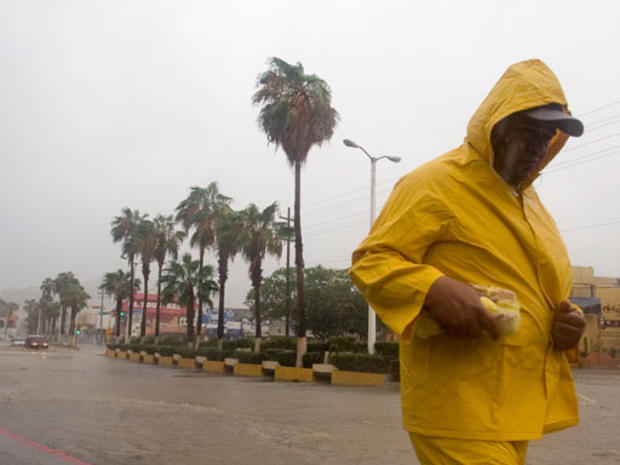
On the same day, in a different city in a different country -- Cabo San Lucas, Mexico -- the arrival of a different hurricane, Henriette, was also flooding streets and making life difficult.
AP Photo/Guillermo Arias
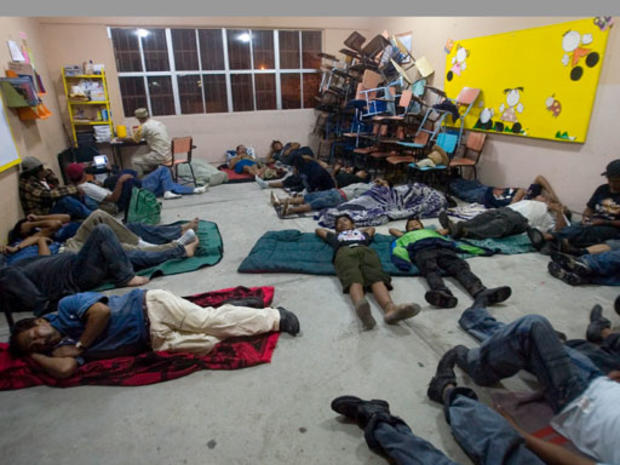
Residents of Cabo San Lucas, Mexico, were forced to take refuge in a shelter as Henriette approached.
AP Photo/Lynne Sladky
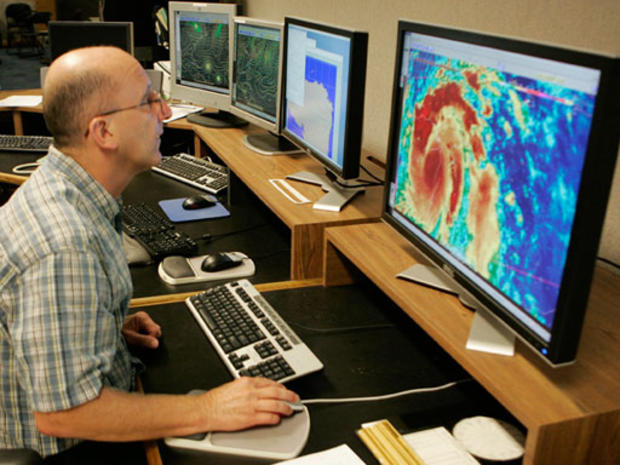
Senior hurricane specialist Lixion Avila at the National Hurricane Center in Miami monitored Hurricane Felix as it made landfall near the Nicaragua-Honduras border on Sept. 4, 2007. Top U.S. experts predict six more hurricanes will form in the Atlantic region this year, three of them packing "major" strength.