AP Photo/NASA
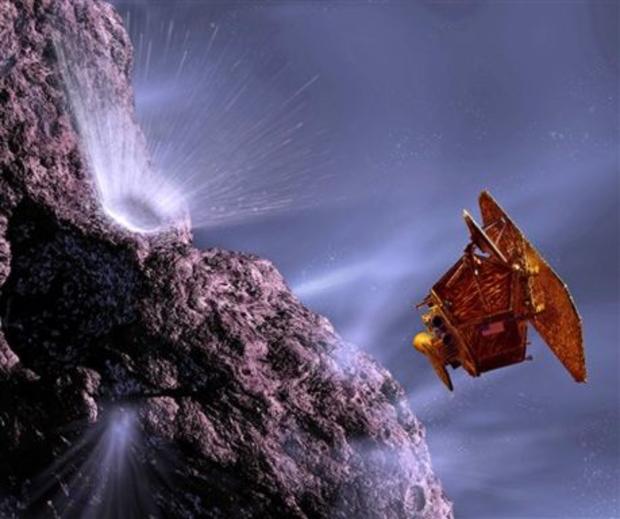
This artist rendition released by NASA shows an explosion, top left, on the Tempel 1 comet after the probe from the Deep Impact spacecraft collided with it July 4, 2005. The successful strike 83 million miles away from Earth marked the first time a spacecraft touched the surface of a comet.
AP Photo/NASA-ESA
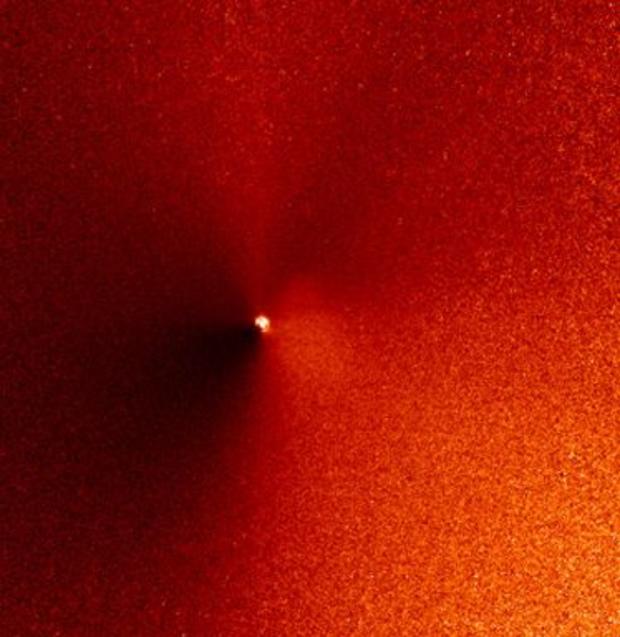
In this image released Monday, June 27, 2005, by NASA and the European Space Agency, is a view of the comet before the outburst. The bright dot is light reflecting from the comet's nucleus, which appears star-like in these images because it is too small even for Hubble to resolve.
AP Photo/NASA-ESA
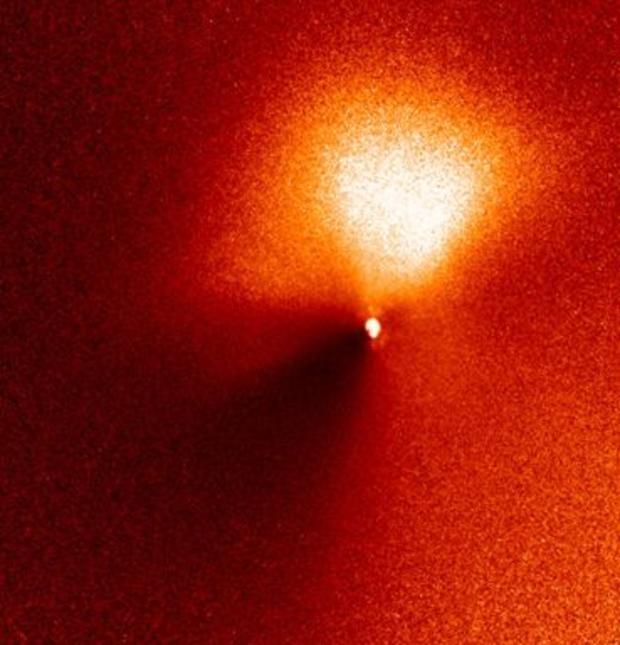
Seven hours later, the photo reveals the jet (the bright fan-shaped area). Comets frequently show outbursts in activity, but astronomers still don't know exactly why they occur. Tempel 1 has been moving closer to the Sun, and perhaps the increasing heat opened up a crack in the comet's dark, crusty surface.
AP Photo/Nick Ut
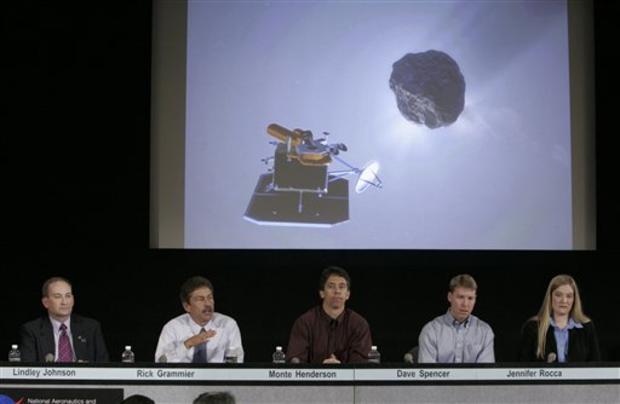
Porject Manager Rick Grammier, second from left, speaks at a briefing on NASA's Deep Impact space mission, July 1, 2005, as other members of the team listen, at NASA's Jet Propulsion Laboratory in Pasadena, Calif.
AP Photo/Robert Lachman
NASA engineers look at images of the successful collision of the Deep Impact Impactor with Temple 1 comet at the NASA Jet Propulsion Laboratory in Pasadena, Calif., July 3, 2005. The purpose of the mission is to study the comet's primordial core.
AP Photo/Robert Lachman
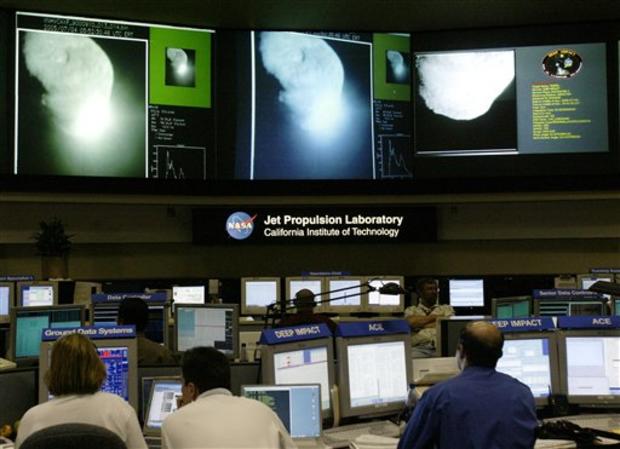
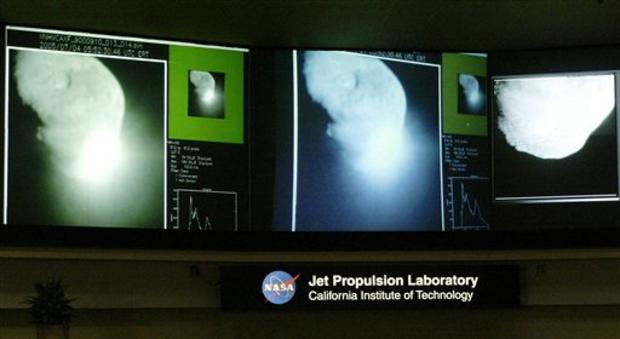
Images confirming successful collision of the impactor probe of the Deep Impact spacecraft with Temple 1 comet are displayed in the Mission Control Room at the NASA Jet Propulsion Laboratory in Pasadena, Calif., July 3, 2005. The successful strike 83 million miles away from Earth marked the first time a spacecraft touched the surface of a comet.
AP Photo/Jet Propulsion Laboratory
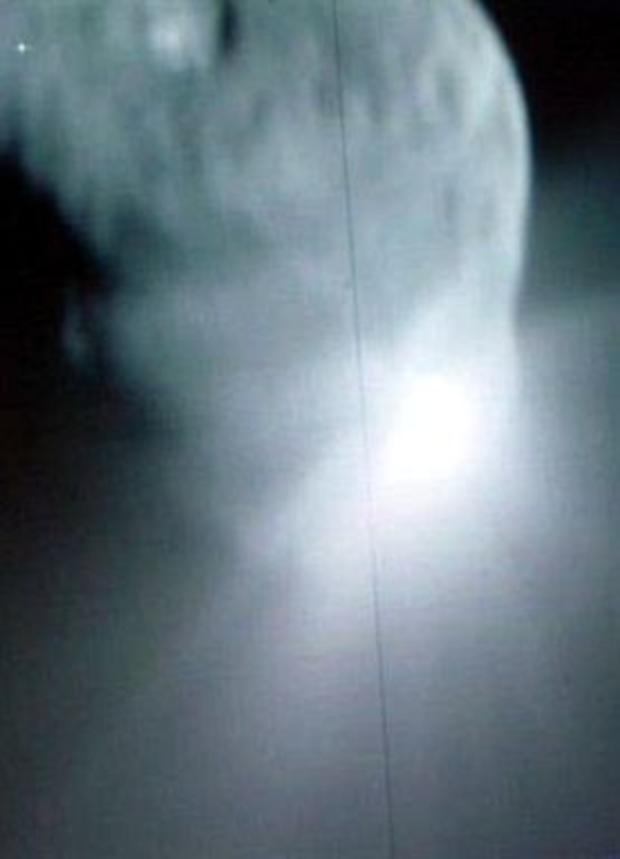
In this image released by NASA/Jet Propulsion Laboratory, the Tempel 1 comet is shown after the impactor probe from the Deep Impact spacecraft collided it July 4, 2005. The successful strike 83 million miles away from Earth occurred just before 11 p.m. PDT, according to mission control at NASA's Jet Propulsion Laboratory in Pasadena, Calif., which is managing the $333 million mission.
AP Photo/NASA/JPL
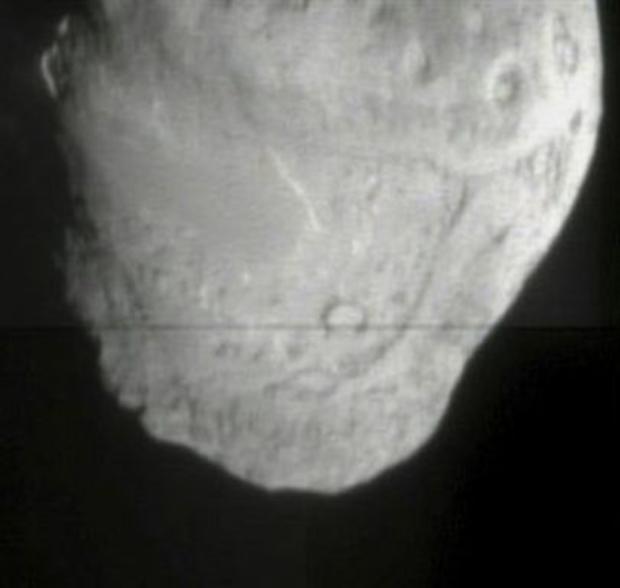
In this photo released by NASA/Jet Propulsion Laboratory/University of Maryland, the nucleus of the Tempel 1 comet is shown in a view from the Deep Impact probe before it collided with the comet, July 4, 2005.
AP Photo/Tom Hood
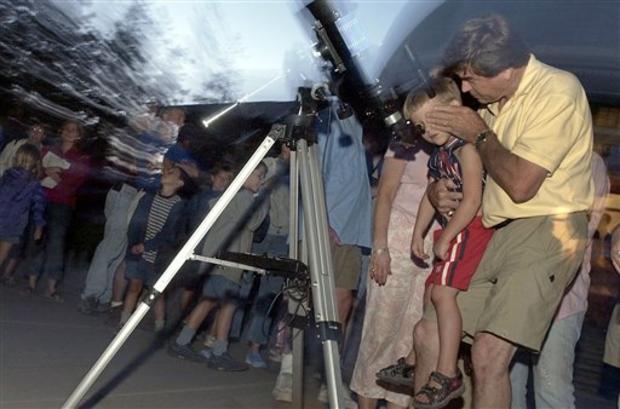
Don Mayer, of San Antonio, Texas, holds his grandson Haydon Mayer, 4, to help him look at the planet Jupiter through a telescope at the Lowell Observatory in Flagstaff, Ariz., July 3, 2005. Even though the Deep Impact comet event was not visible from the observatory, more than 400 people showed up to gaze at the stars from five different telescopes. Observatory staff members also held a discussion about comets and what the Deep Impact mission hopes to discover if all goes as planned.
AP Photo/NASA/JPL
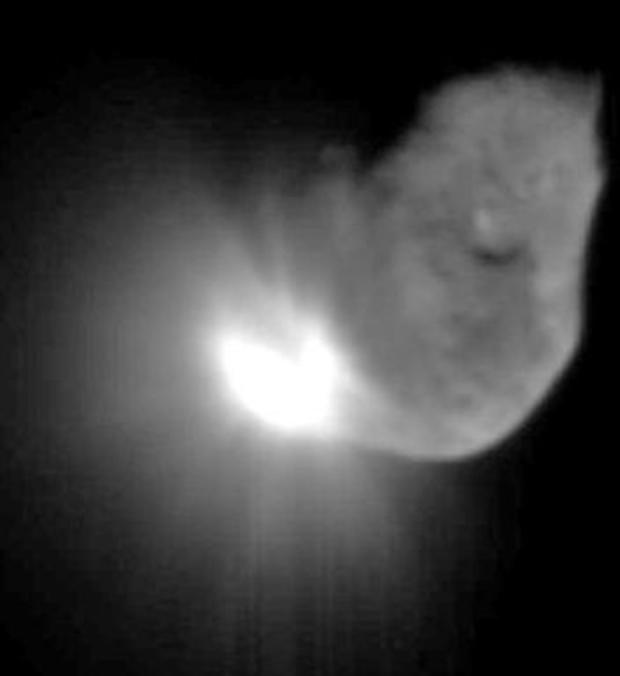
In this photo released by NASA/Jet Propulsion Laboratory/University of Maryland, the Tempel 1 comet is shown after the probe from the Deep Impact spacecraft collided with the comet, July 4, 2005.
AP Photo/Lucy Pemoni
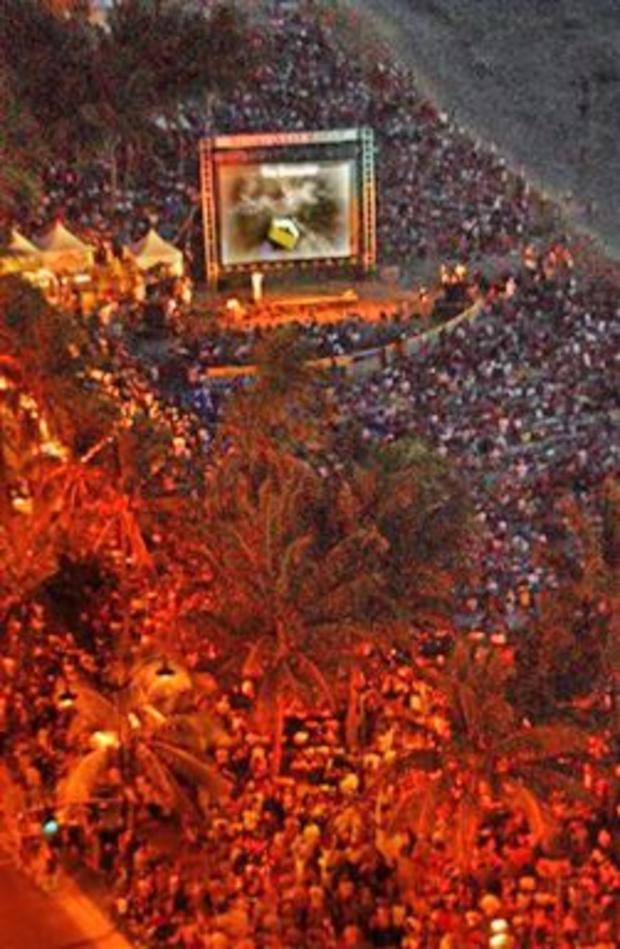
An overflow crowd on Waikiki Beach in Honolulu, Hawaii, views a screen showing an artist's rendering of the Comet Tempel 1 colliding with a probe from the Deep Impact spacecraft, July 3, 2005. About 10,000 spectators jammed the beach to view a direct NASA feed of the impact along with hopes of seeing the actual event in the sky behind the screen.
AP Photo/SGVN
Flight Director Dan Kubitschek is congratulated by team members during the collision of NASA's Deep Impact spacecraft with the comet Tempel 1, July 3, 2005, at the Jet Propulsion Laboratory in La Canada Flintridge, Calif.
AP Photo/Damian Dovarganes
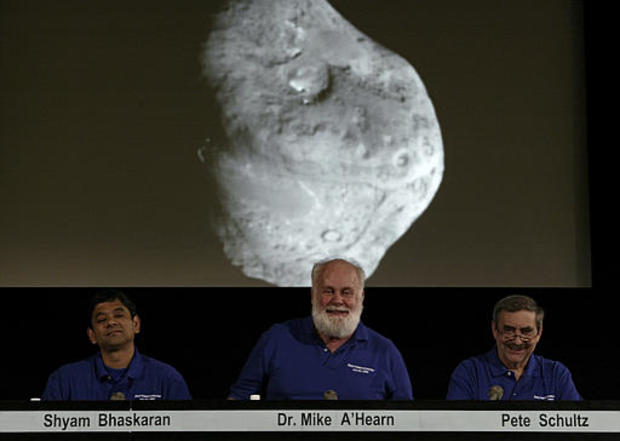
NASA scientists smile as they release an image of Tempel 1 comet prior to its collision with an unmanned probe of the Deep Impact mission, during a Post-Impact news briefing, July 4, 2005, at NASA's Jet Propulsion Laboratory in Pasadena, Calif. From left are Shyam Bhaskaran, Deep Impact navigator; Dr. Mike A' Hearn, principal investigator, center; and Pete Schultz, co-investigator, Brown University,
AP Photo/Lucy Pemoni
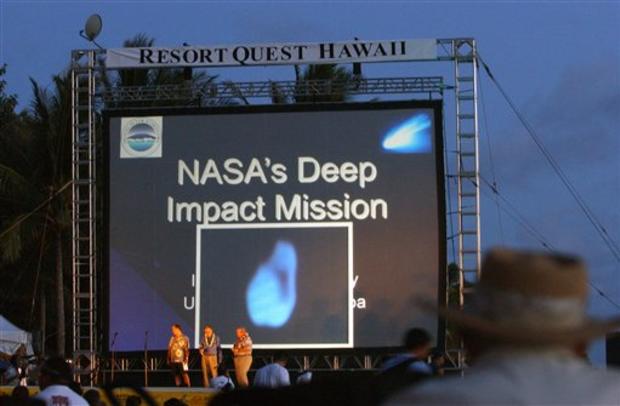
Local officials and astronomers speak to the overflow crowd on Waikiki Beach, in Honolulu, Hawaii, gathered to view Comet Tempel 1 colliding with the impactor probe from the Deep Impact spacecraft, July 3, 2005.
AP Photo/Damian Dovarganes
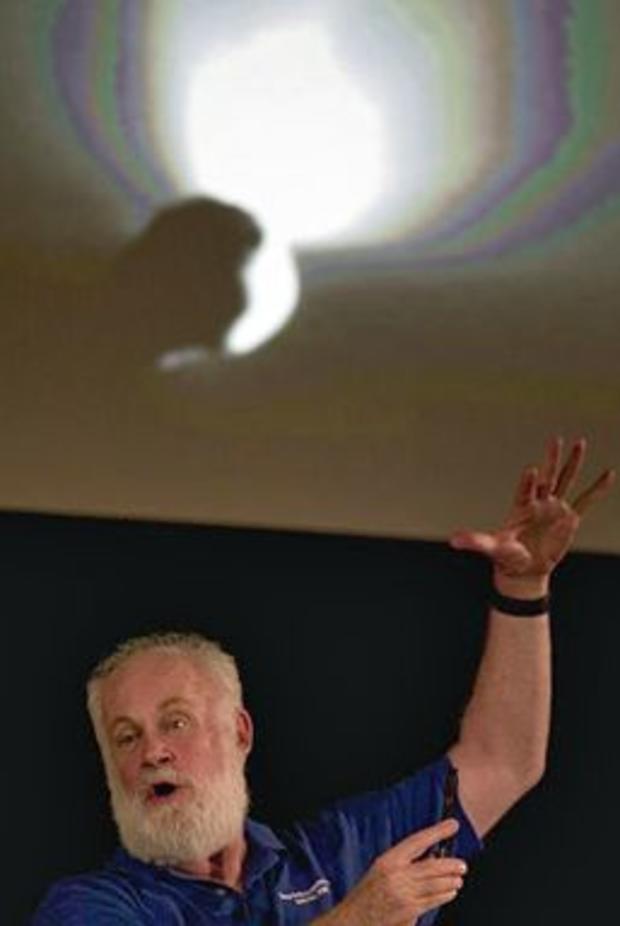
Dr. Michael A. Hearn, principal investigator of NASA's Deep Impact mission, makes comments during a briefing, July 4, 2005, at NASA's Jet Propulsion Laboratory in Pasadena, Calif.
AP Photo/NASA/JPL
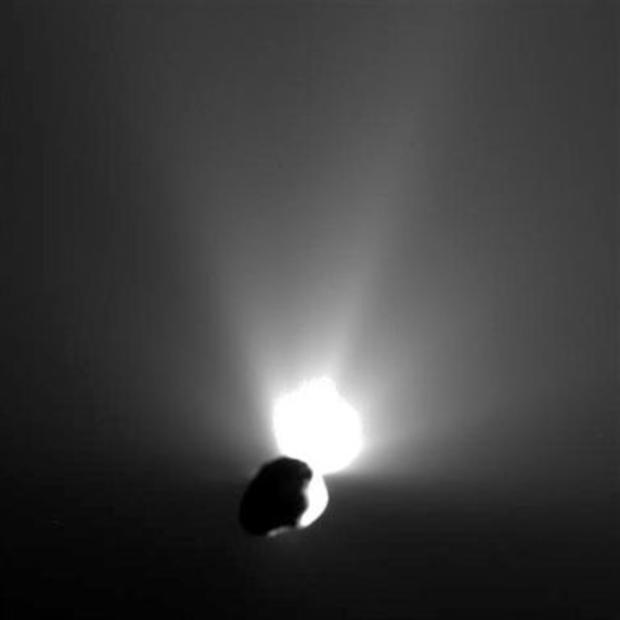
In this photo released by NASA/Jet Propulsion Laboratory/University of Maryland, the Tempel 1 comet is shown after the probe from the Deep Impact spacecraft collided with the comet early Monday, July 4, 2005.
AP Photo/Robert Lachman
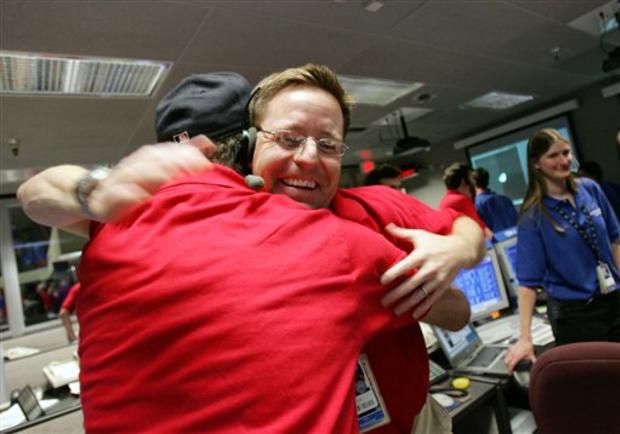
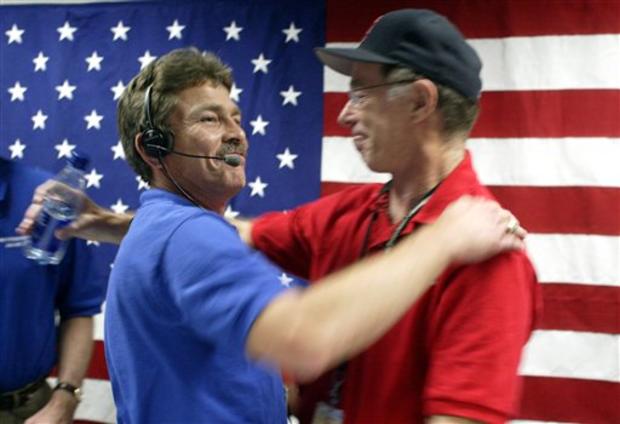
NASA Project Manager Rick Grammier, left, and Chief Engineer Gentry Lee hug after the successful collision of the Deep Impact Impactor with Temple 1 comet at the NASA Jet Propulsion Laboratory in Pasadena, Calif., July 3, 2005. The purpose of the mission is to study the comet's primordial core.