How THC tests have landed more than a thousand new mothers onto child abuse registries

This report is published in partnership with The Marshall Project, a nonprofit news organization covering the U.S. criminal justice system.
Giving birth to her fourth child in January of 2021 was life-changing, says Nicole Hamann, but not in the way she ever imagined. While still at the hospital, Hamann was informed that both she and her newborn tested positive for a trace amount of THC, the psychoactive chemical in marijuana. [A urine test is given to mothers, which is followed up by testing the umbilical cord.] "I felt like, all of the sudden, I was a criminal," Hamann said.
"Through all of my pregnancies, I took very good care of myself and my body. Now all of the sudden, I have these people making me feel guilt and shame and fear."
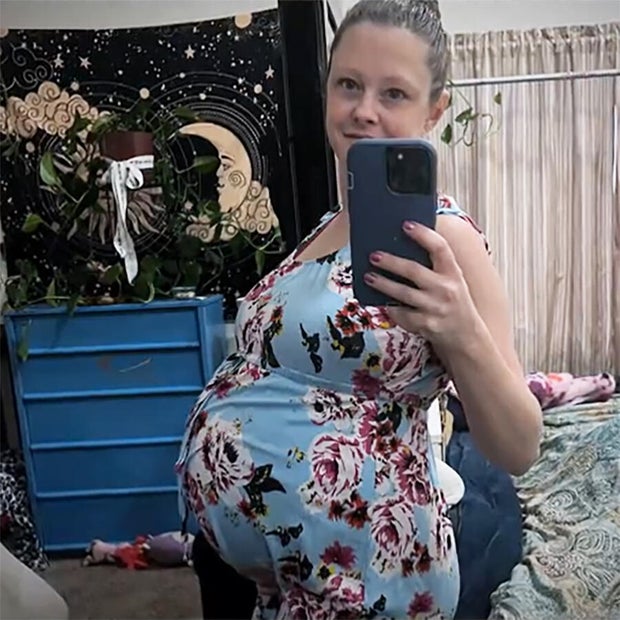
Hamann lives in Idaho, where marijuana is illegal. But a month before giving birth, Hamann, who has no criminal record, says she accidentally ate a pot-laced brownie at a relative's home in Oregon, where marijuana is legal. She says no one was interested in hearing her explanation of why she had THC in her system.
Child and Family Services began an investigation immediately, because in Idaho (and a number of other states), a single positive test result of THC in a newborn is considered presumptive evidence of child abuse.
"They knocked on my door, and there was an officer standing with them, a police officer," Hamann said.
After inspecting her home and speaking with Hamann's other children, state social workers closed her case. "I just thought, 'OK, just tell me what I have to do so that this can all go away,'" she said. "And little did I know that it wasn't going to just go away. This was going to haunt me for the next ten years of my life."
Although social workers found no evidence of drug use, Hamann's name was still placed on the agency's child protection central registry – a list of child abusers. That means she can't work in hospitals or daycare centers. Even volunteering at her children's school is not allowed.
And Hamann's name remains on that list for a period of ten years. "It hurts … it hurts," she said. "It's heavy. It feels like somebody placed a big boulder on my shoulder and I have to carry it around for 10 years."
Hamann is not alone. At least a thousand new mothers in Idaho have been placed on that same registry, many for using marijuana products to relieve pain and severe nausea.
My career is "completely thrown away"
Three years ago, when Ashley McGrath was 22 and pregnant with her son, her morning sickness, she says, consumed the entire day: "Because your stomach is so hungry, but you can't keep anything down," she said. "It almost feels like the flu. Every home remedy I can think of – every tea, everything I'm trying – is making me more miserable. And it was getting to the point where my teeth were starting to be affected, and my throat."
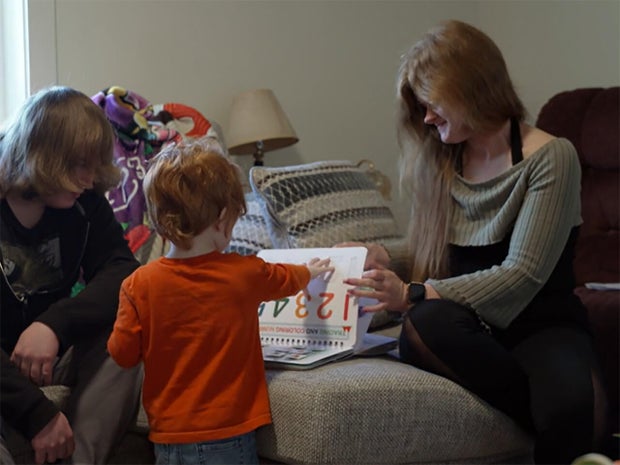
Her doctor prescribed the anti-nausea medication Zofran, but when that, too, failed to offer relief, she turned to marijuana gummies. She said she felt instant relief: "I swear, about an hour in, I was just like, I want to eat!"
McGrath, who was working in healthcare and hoped to become a nurse practitioner, was aware that some studies link marijuana use during pregnancy to lower birth weight and premature births. But, she says, her child was perfectly healthy, and not born prematurely.
Like Nicole Hamann, McGrath and her fiancé were investigated, and then cleared, by social workers. But McGrath says having her name on the child abuse registry has had devastating consequences. "My career as a healthcare worker is not just at risk; it's completely thrown away," she said.
Instead, McGrath says, she has been sentenced to a decade of scrounging for work that doesn't require a background check. She now ekes out a living delivering food orders.
"It makes me feel like I am very closely associated with what a felon would be going through," she said.
"To be depicted as a bad parent … is horrible"
Attorney Rick Hearn, who also has a medical degree, has filed a federal class action suit against the state of Idaho on behalf of these mothers, arguing that they've lost the ability to support their families without due process. "You're not doing anything for them other than stopping their ability to support themselves and their children," he said.
Asked if the state agency has been able to show that any child has been harmed by any of these women using marijuana during pregnancy, Hearn replied, "They have not yet. But what is most relevant to your question is that's not a requirement to go on the list. There's no requirement that the baby looks sick or had any problems whatsoever."
We reached out to the state's Department of Health and Welfare. Their response: "We do not comment on pending litigation."
But across the country, around 300,000 newborns are exposed prenatally to cannabis every year. The legal risk to their mothers depends on where they live – and it can go beyond a child abuse registry. It can actually lead to criminal charges.
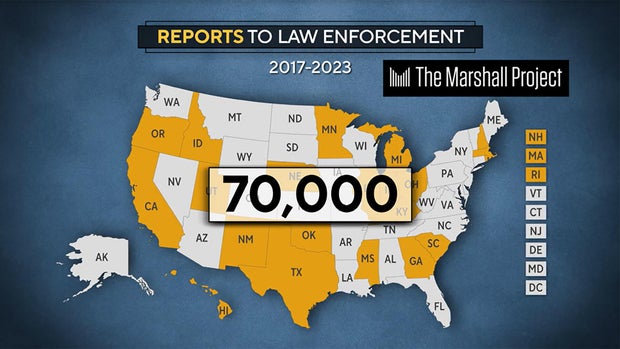
Our joint investigation with the Marshall Project found that, over a six-year period in 21 states, new moms were referred more than 70,000 times to law enforcement for allegations of substance use during pregnancy, many for using THC.
In 2021, when Ayanna Harris-Rashid was pregnant with her third child, she moved from California (where marijuana is legal) to South Carolina (where it is not). She says that within her Native American culture, it's very common to use CBD and hemp-based products (which legally can contain tiny levels of THC) to relieve cramping and nausea.
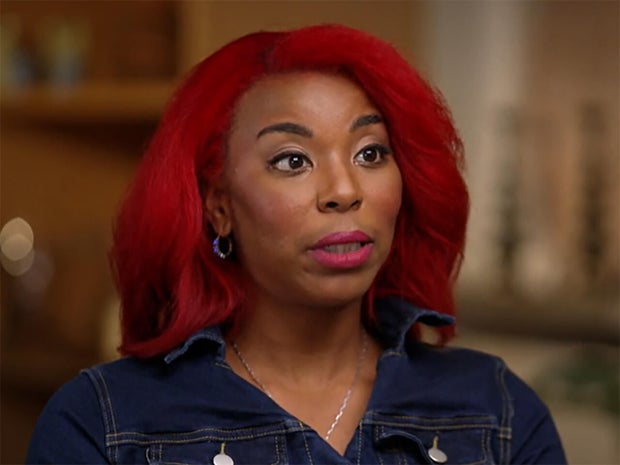
"To be depicted as a bad parent, and all I want and I've achieved to be is a great mom, is horrible," she said. "I didn't do anything detrimental or neglectful to my child."
Harris-Rashid said that her South Carolina midwife never alerted her that if she had any THC in her system she could run into a problem: "No. I was completely blindsided, because I didn't even know that they were going to drug test me. And it's supposed to be with reasonable cause for suspicion."
But in South Carolina, any newborn who tests positive for THC, even if the mother used legal CBD products, is supposed to be reported to the state's Department of Social Services, and law enforcement.
Harris-Rashid was home with her four-week-old baby when she got the call, and was told, "'We're issuing a warrant for your arrest. You have three days to turn yourself in.' I just sank and started crying."
Harris-Rashid was charged with "unlawful conduct towards a child," a felony, and jailed. She had to wait until the following morning to bail out. "I was like, this is not real," she said. "You're not taking me from my newborn baby and locking me in a jail cell. It was the most horrific experience of my life."
"It took everything away from me"
Attorney Erin Bailey agreed to defend Harris-Rashid, who was facing ten years in prison and unable to pay a lawyer. "It is outrageous that these women are being charged with a criminal offense," she said. "I was outraged because I know that every pregnant woman is constantly having to weigh risks, educate herself, and make some hard decisions."
Bailey said that, even though THC is illegal in South Carolina, "does it rise to the level of being charged with a ten-year felony for making the wrong risk calculus?"
Jimmy Richardson, the Horry County Solicitor who runs the office that prosecuted Harris-Rashid, told us, "Yeah, I think it's enough for an arrest. The standard is very low, and that is 'more probable than not' that this child may have been put in an unreasonable risk of harm."
A Marshall Project data analysis of eight states (California, Georgia, Kentucky, Minnesota, Ohio, Oklahoma, South Carolina and Texas) from 2017-2024 found that moms of Black newborns facing allegations of drug use are referred to law enforcement around two-and-a-half times more often than mothers of White babies.
Asked if a mother's background or skin color plays a part in this, Richardson replied, "I'm sure it could, yeah. I would suspect that, you know, if it was the doctor's wife, they might not even call."
A year after her arrest, charges against Harris-Rashid were dropped. Richardson says that most of these cases involving just THC are either dismissed, or end with probation. But attorney Erin Bailey says damage to the women has already been done.
"Number one, we're a cash bond state," Bailey said, "which means you use a bondsman. So, that's a thousand dollars down the drain for a brand-new mother.
"Most times, these women have to spend the night in jail. For a brand-new breastfeeding mother, that's enough to completely break your breastfeeding bond," she said.
Harris-Rashid's record has since been expunged. But for the women like Hamann on the child abuse registry in Idaho, it's been much harder to move on.
Nicole Hamann said, "One test, one test. I don't know, I get really frustrated because it took everything away from me."
Three years after Hamann was placed on the registry, her husband was seriously injured in a motorcycle accident, and could no longer work. "When the accident happened and our world got flipped upside-down, that's when I realized the weight," she said. "I felt like I couldn't provide for our family because any little jobs that I could do wasn't going to be enough to make the kind of money that I needed to keep a roof over our head."
Hamann hesitated to speak out. She lives in a small town, and fears she could be judged harshly. And yet, she faces five more years on the registry. She can no longer afford, she says, to be silent.
"I know this isn't right and I know that this isn't fair," Hamann said. "And if there is anything that I can say or do to help make sure that this doesn't happen to anybody else, then that is my obligation and my responsibility."
WEB EXCLUSIVE: Dr. Stephen Patrick on drug testing new mothers (Video)
For more info:
Credits:
Correspondent: Erin Moriarty | Producer: Sari Aviv | Marshall Project Reporters: Shoshana Walter, Jill Castellano | Editor: Ed Givnish | Web Editor: David Morgan | Executive Producer: Rand Morrison
See also: