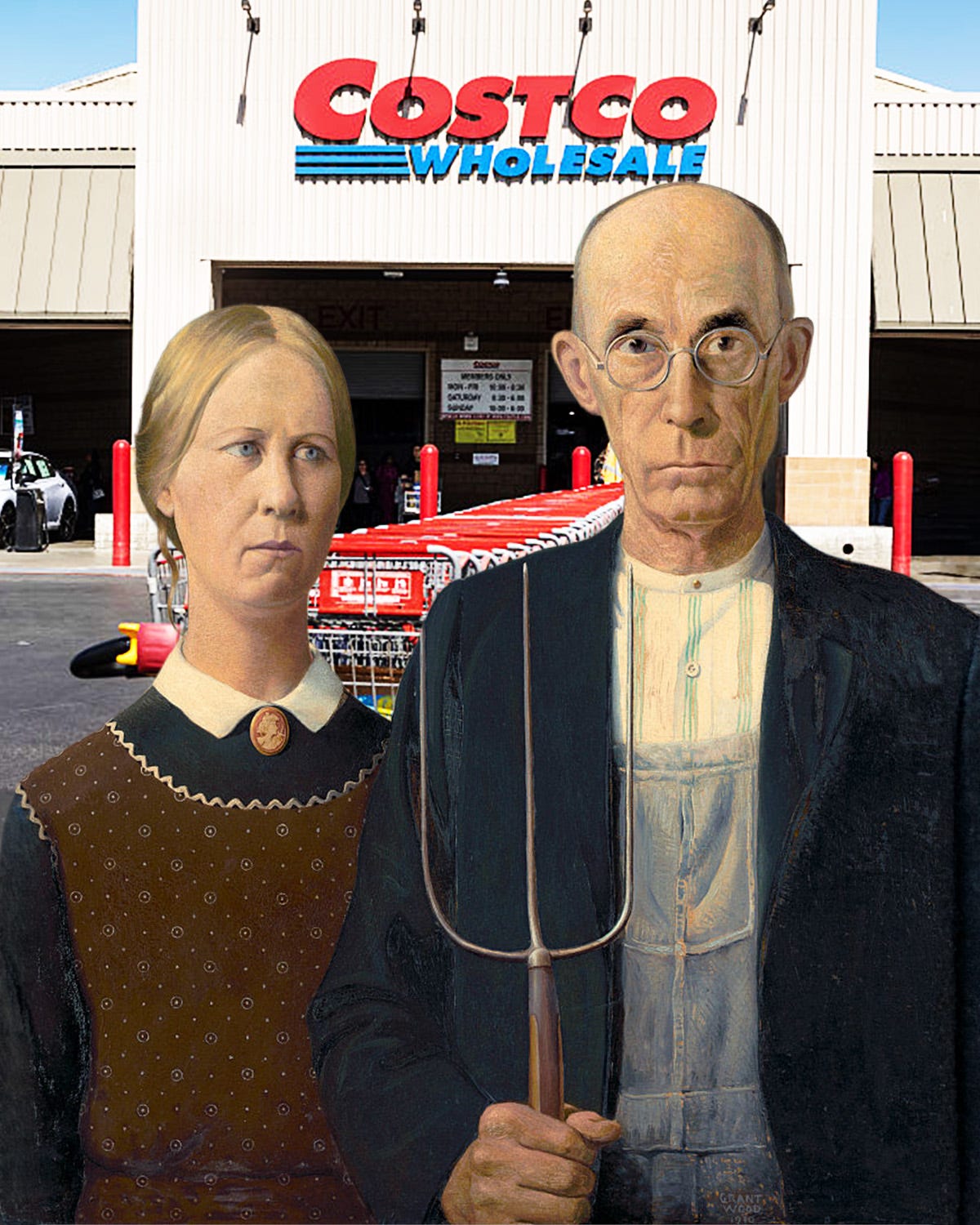
Taking on credit card debt to buy food

Those beeps at the checkout counter aren't music to anyone's ears these days. Each one is an ear-piercing reminder of how just much more we're paying for groceries this Thanksgiving – 32% more, to be exact – than we paid in 2020, according to the Bureau of Labor Statistics. One mother shopping with her daughter told us, "Feels like all my money goes to food."
The USDA doesn't report food insecurity figures like they used to; that survey was discontinued last year. What we do know is, in 2024 nearly 14% of Americans said they were struggling to eat, making this Thanksgiving yet another exercise in the art of the possible.
First, consumers are changing where we shop. Discount grocery chains like Aldi, Lidl, and Food 4 Less are reporting greater and greater market shares, giving traditional supermarkets, like Kroger, a real run for their money.
David Rinaldo, chief operating officer at Aldi, says there used to be a stigma around discount stores. Now, Aldi is on track to open 150 stores this year alone. "I never would have dreamed we'd ever get to the point that it would be that mainstream, that people would come to a limited assortment discount grocer to be where they shop," Rinaldo said.
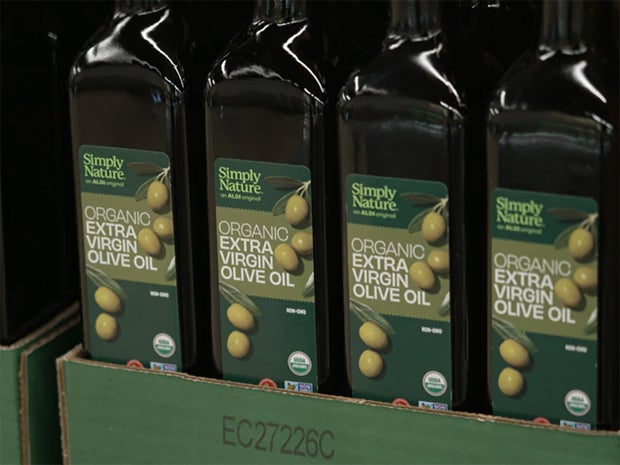
Part of the draw? Cheaper in-house brands, contracted out to manufacturers that make them for stores like Aldi and others – assembly lines tailored to a specific market. They aren't the no-name generic brands you might remember from the 1970s and '80's. These are different. It's what fills 92% of what's on Aldi's shelves.
Private labels, says Rinaldo, aren't the exception; they're now the trend. "I think there's been a movement with private label," he said. "Nine out of the last ten years, private label has grown faster than national brands."
But it's not just where American are buying groceries; it's how they're paying for them that is changing. According to a recent survey by the Urban Institute in Washington, D.C., about 35% of us are using credit cards to buy groceries. But unlike past years, 1 in 4 customers is having trouble paying off that food debt.
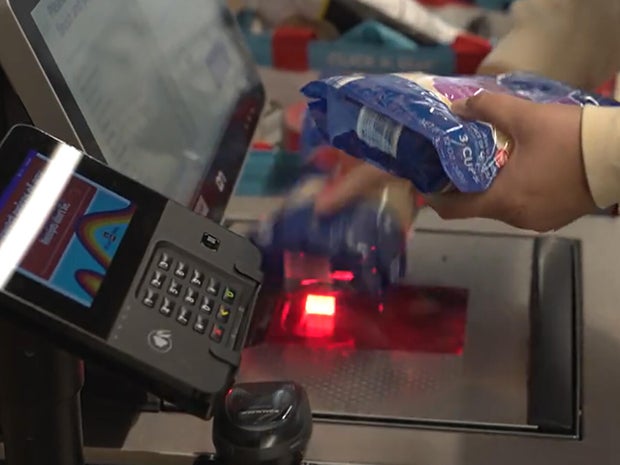
"That's a substantial share of families that are needing to turn to credit to purchase their groceries, and then taking on debt in the process of doing so," said Cassandra Martinchek, a senior researcher associate at the Urban Institute. She says it's not just credit cards we should be concerned about – it's digital lay-away services (like Klarna, Splitit, Affirm, Sezzle and Zip) that people are increasingly using to buy food.
They're called BNPL, or Buy Now Pay Later apps, that often charge little to no interest. According to the same survey, 1 in 10 is using them to buy groceries, but more than a third of those shoppers also missed a payment.
Martinchek said, "This strategy can help them meet their needs right now, but it could be consequential for their future financial stability and also mobility."
Jordan Williams is mom to two-year-old Micah, and fiancée to Julian Morgan. She was using a Buy Now Pay Later app for her groceries before she got engaged, but as a single mom she fell behind. "It felt a bit like a rat race for a little while, like I couldn't keep up," she said.
Williams stressed to be on a rotating line of credit where she was always owing: "I really could never just afford to just buy the groceries I needed, because I was busy paying off the last groceries I needed," she said.
Her delinquent payment meant her account was locked. Before she could go shopping for more groceries again, she had to pay off the entire balance. "I couldn't afford $200 in groceries the first time, I can't afford $160 today, all of this, and you can't use the app anymore," Williams said. "And after 30 days, it starts to take a hit on your credit as well."
Like millions of others this Thanksgiving, Williams feels like she shouldn't be struggling to eat, least not on her salary. She has a master's degree, teaches English at the University of North Carolina at Greensboro, and has a second job as a social media influencer to boot. "If it was just like, you know, 28-year-old poor money management issues, that's one thing," she said. "But if this is what it looks like for me, what does that look like for everybody else?"
The answer? Not all that great. Unlike the price of gas, which is finally starting to come down, for now, the price of groceries hasn't.
And Williams feels it at the end of the month: "I'm like, okay, payday is on the 28th. If it's like the 24th, we are stretching to get by," she said.
She is planning to do a potluck-style Thanksgiving this year – it seems, few can afford feeding family, extended family, and friends of family as well without everyone pitching in.
If there IS something to be thankful for, the increase in grocery prices is expected to slow by next Thanksgiving. But even so, that Norman Rockwell image of the holiday is still for so many more the ideal than reality.
Story produced by Mark Hudspeth and Mary Raffalli. Editor: Ed Givnish.
For more info:
- Aldi Grocery Stores
- Kassandra Martinchek, senior researcher associate, Urban Institute
- Jordan Williams on TikTok
Check out the "Sunday Morning" 2026 Food Issue Recipe Index, featuring delicious menu suggestions from top chefs, cookbook authors, food writers, restaurateurs, and the editors of Food & Wine Magazine!