Supreme Court upholds state bans on transgender athletes in girls' and women's sports
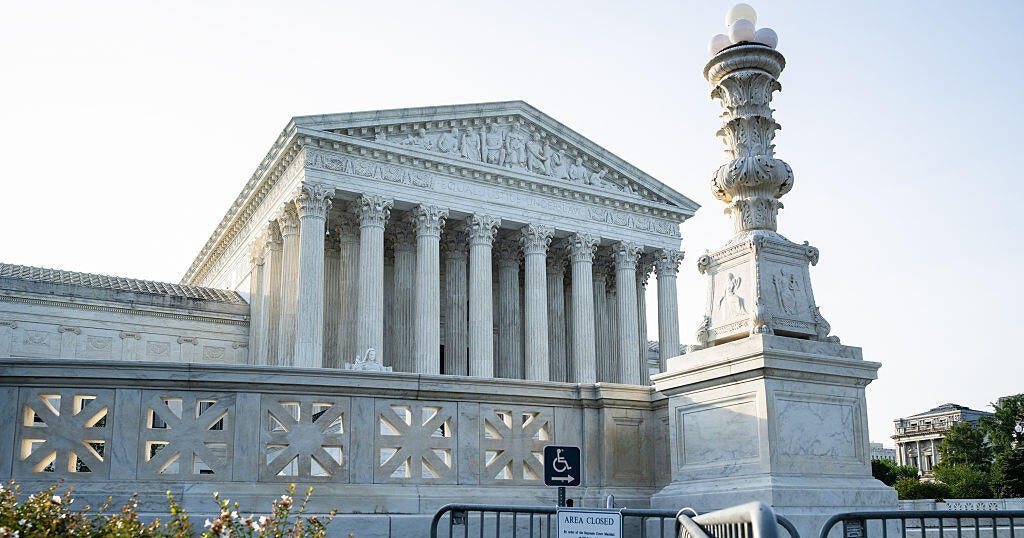
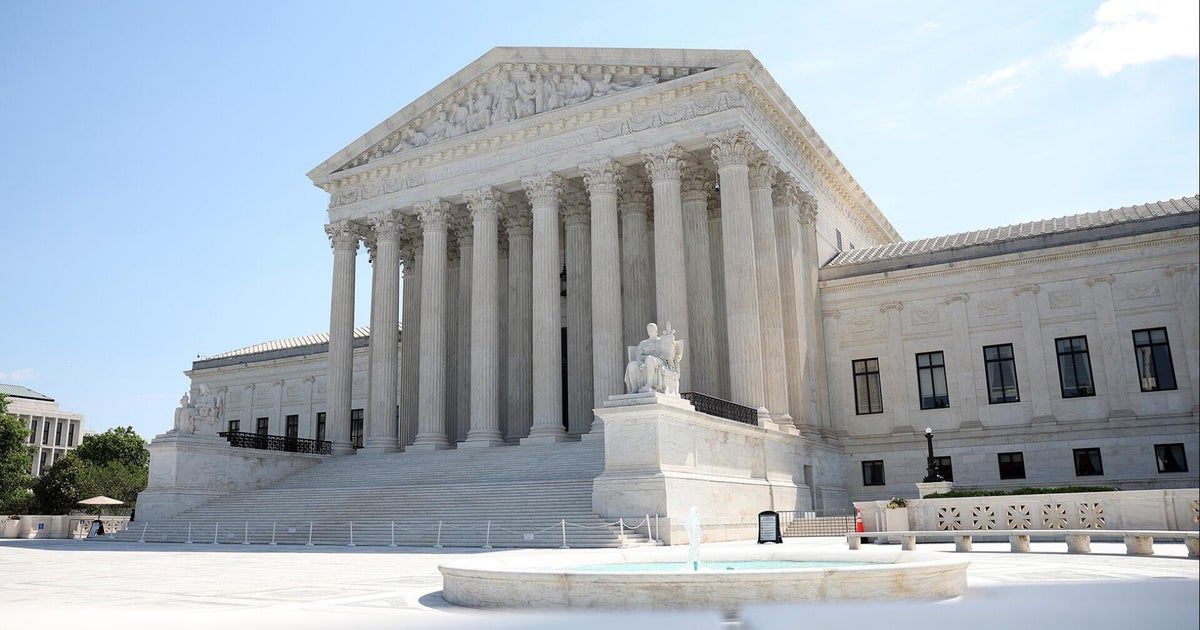
Washington — The Supreme Court on Tuesday ruled states can prohibit transgender athletes from competing on girls' and women's sports teams, a decision that delivers the latest setback for transgender rights.
In two of the most closely watched cases of its term, the Supreme Court upheld laws from West Virginia and Idaho that restrict transgender athletes' participation in school sports. The cases are known as West Virginia v. B.P.J. and Little v. Hecox.
Justice Brett Kavanaugh authored the opinion for the majority, writing that under Title IX — the landmark law that requires equal opportunity in sports — and the Constitution's Equal Protection Clause, schools can base eligibility for women and girls' sports teams on biological sex.
"Consistent with Title IX and the Equal Protection Clause, we hold that the States may maintain women's and girls' sports for biological females. They may determine eligibility for women's and girls' sports based on biological sex," Kavanaugh wrote. "The Constitution and Title IX do not require an overhaul of women's and girls' sports throughout America."
The three liberal justices dissented from the majority's finding when it comes to the Equal Protection Clause and said it shouldn't have resolved that issue because of unanswered factual questions. The liberal wing of the court, however, agreed with the court's conservatives on Title IX. Justice Sonia Sotomayor read a summary of her dissent from the bench, a signal of strong disagreement with the majority's opinion.
"In the end, to the Court, the facts do not matter, even though the consequences are serious. The ban is absolute, so B.P.J. cannot practice on girls' teams, even if she would not take anyone's spot in an eventual competition, even if everyone who tries out for the team makes it, and even if having the chance to participate could aid immensely in treating B.P.J.'s gender dysphoria," she wrote, referring to the transgender girl at the center of the West Virginia case. "Sports, of course, are often zero sum, but the law need not and should not be."
The ruling protects similar laws in 27 states that have been enacted in recent years in response to high-profile instances of transgender athletes competing in girls' and women's sporting events. President Trump signed an executive order last year that prohibits educational programs that receive federal dollars from allowing transgender girls and women to play on the teams that align with their gender identity.
The NCAA and the International Olympic Committee have also updated their eligibility policies, limiting competition in women's events to only athletes assigned female at birth.
The ruling is the latest to land before the Supreme Court that tested transgender rights. In its last term, the high court upheld a Tennessee law that restricts access to certain medical treatments for minors experiencing gender dysphoria. Half of the states have similar measures in place.
But in 2020, the Supreme Court ruled that a federal civil rights law known as Title VII prohibits an employer from firing a worker because of their sexual orientation or transgender status. Challengers to the athlete bans had argued that the court's reasoning in that case should apply to Title IX. But Kavanaugh wrote that the civil rights law and its 2020 ruling "are not relevant in this very different statutory and factual context."
"Title VII concerns employment, whereas Title IX as relevant here focuses on sports," he said. "The two factual contexts are vastly different."
The West Virginia law
West Virginia enacted its law, called the Save Women's Sports Act, in 2021. The measure requires athletic teams to be designated based on biological sex at birth and bars students assigned male at birth from playing in girls' and women's sports.
Before the law took effect, Becky Pepper-Jackson, the transgender girl who wanted to compete on her school's girls cross-country and track teams, sued to block its enforcement. Pepper-Jackson began socially transitioning in third grade and has taken puberty-delaying medication and hormone therapy. She is now in high school.
A U.S. district court upheld West Virginia's law in 2023, but a federal appellate court in 2024 ruled that the measure unlawfully discriminates against Pepper-Jackson on the basis of sex.
At issue in the case was whether Title IX or the Constitution's Equal Protection Clause prevented a state from forbidding transgender girls and women from playing on the athletic teams that match their gender identity. The court ruled that they do not.
Lawyers for Pepper-Jackson had argued that the bans targeted only a small number of athletes — their client is the only transgender athlete in West Virginia, they said. Additionally, because of puberty-delaying medical treatment, Pepper-Jackson and other transgender girls like her do not have any biological athletic advantage over competitors designated female at birth, her lawyers said.
But state officials said the bans draw permissible distinctions between the sexes, classifications that are substantially related to their interest in protecting girls' and women's sports.
Title IX was enacted more than 50 years ago and prohibits sex discrimination in federally funded education programs. Two years after its passage, regulations were adopted to allow schools to operate sex-separated athletic teams, as well as separate locker rooms, restrooms and showers. Schools, though, must provide "equal athletic opportunity" for members of both sexes.
The Idaho law
The Supreme Court also weighed a challenge to a law from Idaho, which was the first state to forbid transgender athletes from participating in girls' and women's sports.
Lindsay Hecox filed her lawsuit challenging Idaho's law after seeking to compete on the women's track and cross-country teams at Boise State University and argued that the state's ban was unconstitutional and a violation of Title IX. A federal appeals court ruled in 2024 that Idaho's ban is likely unconstitutional.