Sotomayor apologizes for criticizing Kavanaugh over ICE arrests, in rare public Supreme Court clash
Supreme Court Justice Sonia Sotomayor apologized Wednesday for publicly criticizing Justice Brett Kavanaugh over a ruling on immigration stops — and seeming to imply that her conservative colleague's views were shaped by an out-of-touch upbringing.
"At a recent appearance at the University of Kansas School of Law, I referred to a disagreement with one of my colleagues in a prior case, but I made remarks that were inappropriate," Sotomayor said in a statement issued by the Supreme Court on Wednesday. "I regret my hurtful comments. I have apologized to my colleague."
Sotomayor did not mention Kavanaugh by name. But during last week's event in Kansas, she reportedly offered rare — and personal — criticism of a Supreme Court order in which Kavanaugh was the only member of the majority to lay out his rationale in writing.
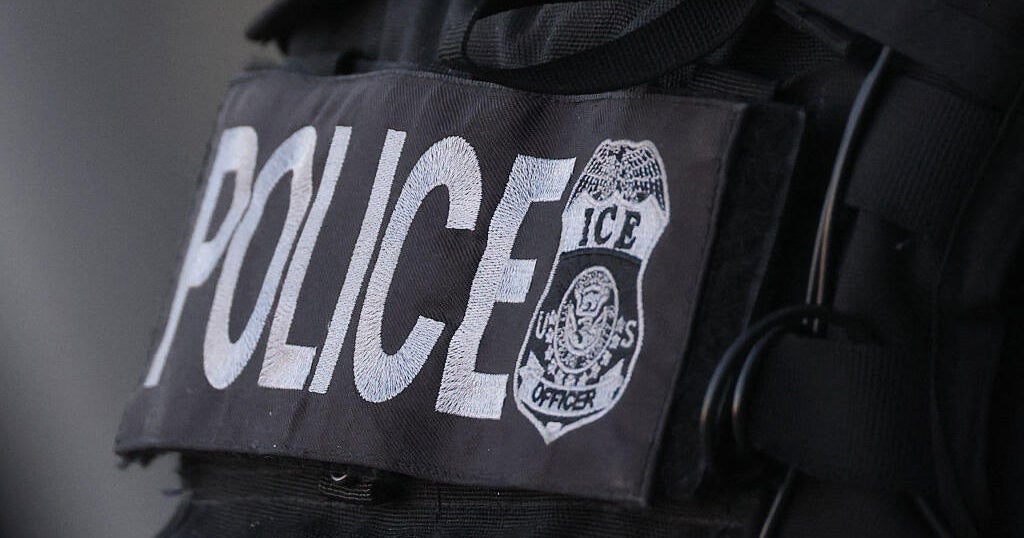
The September 2025 order cleared the way for Immigration and Customs Enforcement to resume broad sweeps in Los Angeles, halting a lower court ruling that restricted ICE's practices. The lower court found the agency had unlawfully detained people, and said ICE could not rely solely on factors like race, occupation or use of Spanish in deciding whether it had reasonable suspicion that somebody is in the United States illegally.
Kavanaugh penned a concurrence that questioned the lower court ruling, writing that ethnicity cannot be the sole reason why somebody is stopped but could be a relevant factor. He also wrote at one point that the immigration stops in question were typically a "brief encounter," with detainees free to go once they demonstrate they are in the country legally.
Sotomayor referred to those comments during her appearance at the University of Kansas, saying one of her colleagues wrote that "these are only temporary stops."
"This is from a man whose parents were professionals. And probably doesn't really know any person who works by the hour," Sotomayor continued, according to Bloomberg.
A native of the Washington, D.C., area, Kavanaugh's father was a lobbyist and his mother was a prosecutor and judge. Sotomayor grew up in a Bronx public housing complex, and was primarily raised by her Puerto Rico-born mother — a nurse — after her father died when she was nine. Both justices attended Yale Law School, separated by 11 years.
It is unusual for Supreme Court justices to publicly criticize each other's backgrounds, and the court's liberals and conservatives have often made a point of emphasizing that their disagreements are not personal. In a 2018 CNN interview after Kavanaugh was confirmed by the Senate, Sotomayor referred to the nine justices as a "family."
Asked about her relationships with the other eight justices during a speaking event at the University of Alabama last week, Sotomayor said "most of us actually like each other" because "I'm not thinking that how they vote defines them as people."
"I daresay that with virtually all of them, I certainly have a civil relationship. And with many of them, I think I daresay that I have a friendship," Sotomayor said.
But Sotomayor was sharply critical of the Supreme Court's order on ICE stops at the time that it was issued. She wrote in a dissent joined by the two other liberal justices that the federal government — and Kavanaugh's concurrence — had "all but declared that all Latinos, U. S. citizens or not, who work low wage jobs are fair game to be seized at any time."
"We should not have to live in a country where the Government can seize anyone who looks Latino, speaks Spanish, and appears to work a low wage job. Rather than stand idly by while our constitutional freedoms are lost, I dissent," she wrote.