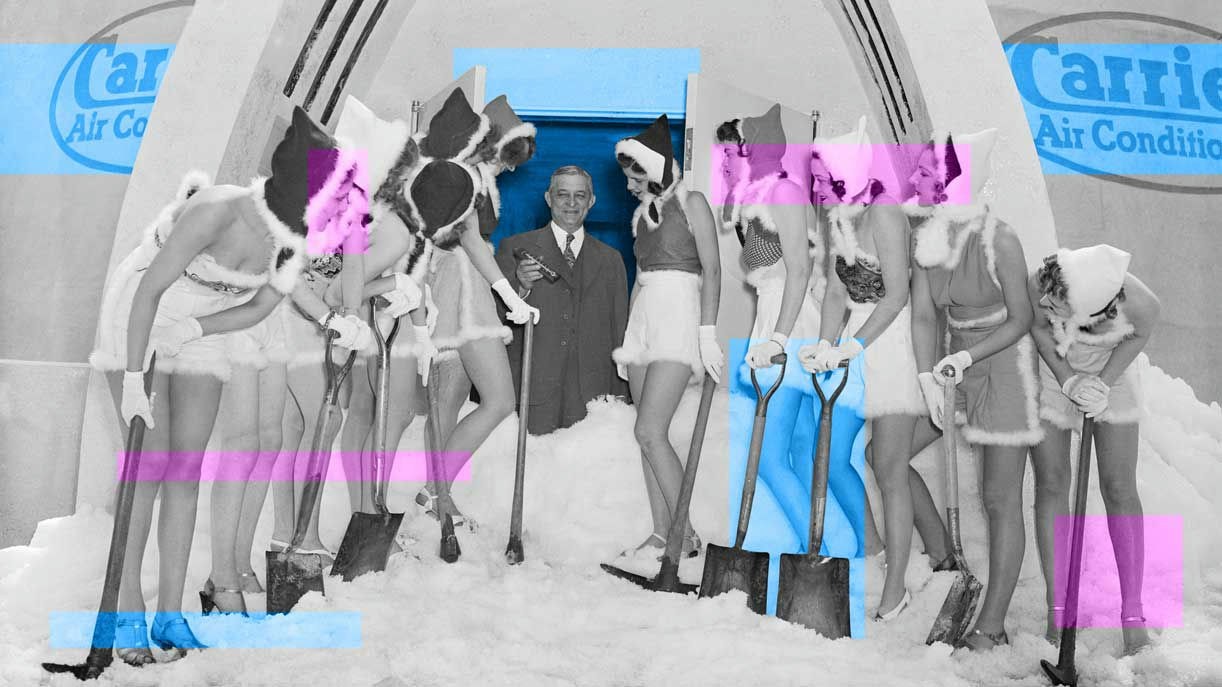
Short pants: The long and the short of it

The summer of 1936 wasn't just hot; it was dangerously hot. At least 5,000 people ended up dying from heat-related causes. "New York City, Baltimore, Columbus, Ohio, Lexington, Kentucky, Minneapolis – I mean, cities were hammered," said Geoff Williams, the author of "The Summer of Death," about that great heat wave. "For weeks, some cities were 100° or over. There were records that were hit, and still have not been broken."
Since air conditioning wasn't in most homes, many people resorted to sleeping in movie theaters, or even outdoors. "All day, you're suffering, and then you can't sleep," Williams said. "And this would go on day after day after day."
This was the kind of heat that changed the way people lived – and during an otherwise buttoned-up time in America, it changed the way they dressed.
Grownups wearing short pants in the summer. No big deal, right? But in some places around the country, you were flirting with the law. In Yonkers, New York, where Mike Spano is currently mayor, wearing shorts wasn't once just taboo; it was illegal.
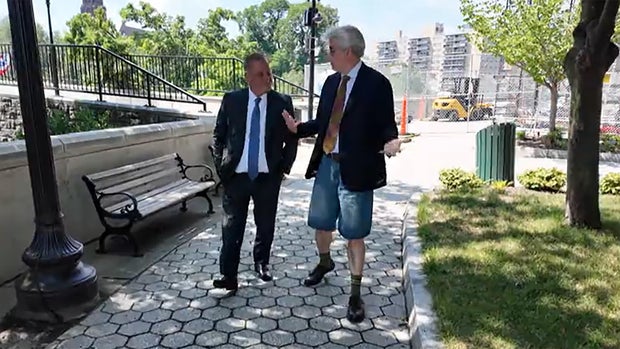
The summer before the heat wave, in 1935, Yonkers Alderman William Slater led the city council to ban, among other things, halter tops and shorts from the city streets. Violaters could face a $150 fine and 30 days behind bars.
Asked if he thought Alderman Slater was actually wearing shorts himself behind the scenes, Spano laughed, "Isn't that usually the case?"
At one point, there were ten police officers assigned to the anti-shorts patrol – what Spano says was absolutely not a responsible allocation of resources.
But on June 21, 1936, two reporters from the New York Daily News decided to test the law. After arriving in Yonkers wearing shorts, they were carted away by police. "They asked that they be arrested," Spano said. "A little bit of public disobedience, because they wanted to right what they saw as a wrong. Love it. It's so American."
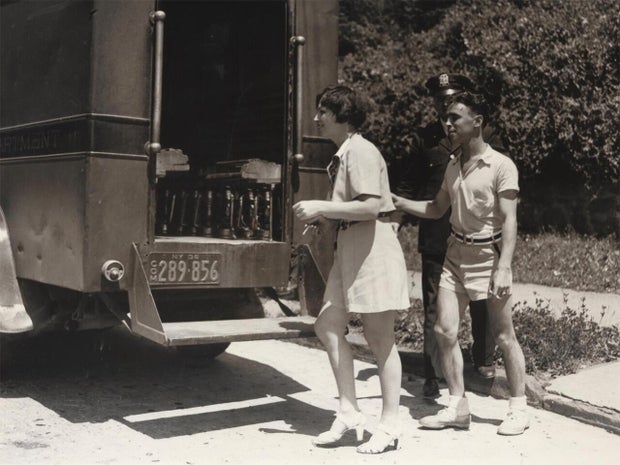
They were fined $10. But after a long court battle, their conviction was overturned and the law thrown out.
In 1937, a new "modesty ordinance" was passed in Yonkers, but that, too, was short-lived.
Erin Black, who teaches costume design history at New York University's Tisch School of the Arts, said, "It was scandalous to show legs during certain eras."
She showed us what men sported during the Elizabethan Era – what were called pumpkin hose or pumpkin breeches, which men wore with stockings. They kept their poofy shape because they were stuffed with sawdust and horse hair. "And in the summer in England, bugs thought it was a great place to live," Black said. "So, you could have an infestation problem in your pumpkin hose."
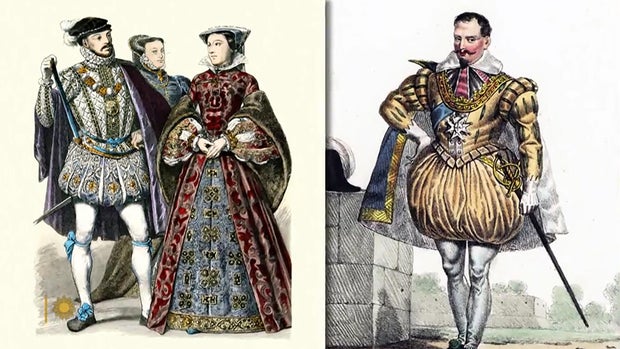
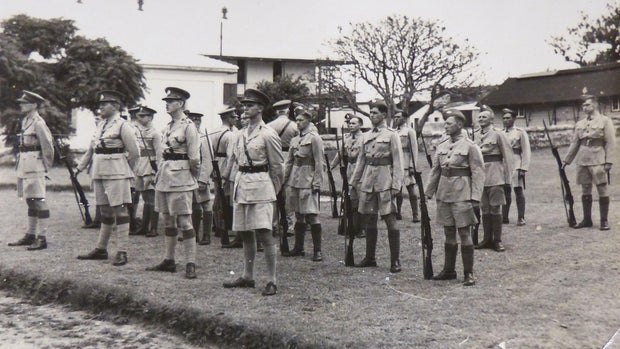
By the late 1800s, the only people wearing shorts were young boys. But during World War I, British soldiers stationed in sweltering Bermuda liberated their lower legs: "The soldiers would take their Army knife and cut their own pants off at the knee," Black said.
And thus, the birth of Bermuda shorts was a climate story. "Correct," said Black. "They couldn't stand the heat. They had to do something."
Women, of course, had to wait longer to go shorter. The popularity of World War II pinup girls like Betty Grable helped, and by the 1950s, shorts were short.
The James Brown song "Hot Pants" came out in 1971, but Black says that it was disco that made hot pants high fashion.
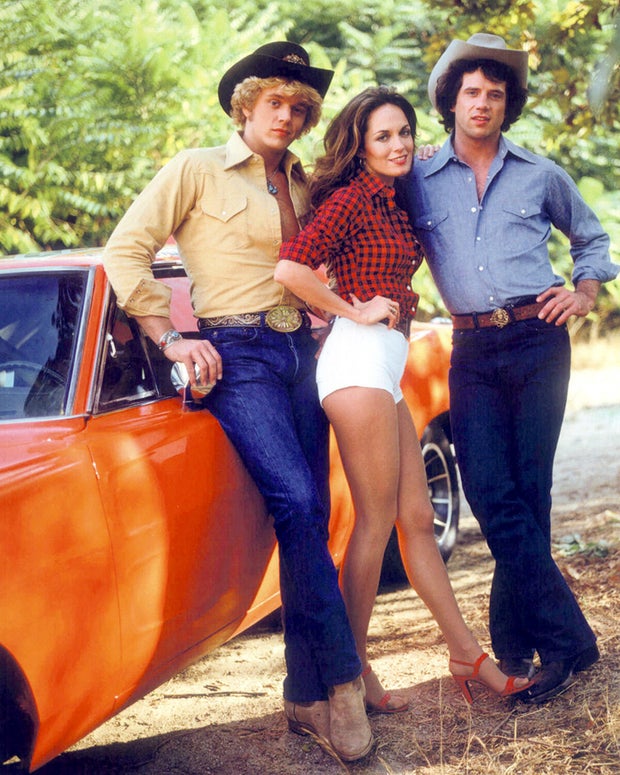
And we cannot ignore actress Catherine Bach, who played Daisy Duke on "The Dukes of Hazzard," whose very short shorts were a phenomenon. "Absolutely," said Black. "And we still call them Daisy Dukes."
These days, shorts are worn just about everywhere, including at work, even by Mayor Mike Spano, in the city where they were once forbidden. And in Ohio, they're worn regularly by writer Geoff Williams. "Oh, I love them," he said. "I have thought so many times that if I went back to 1936, that summer, I would have been doomed."
Indeed, this summer's weather has given us a lot to complain about, but we can all be thankful for shorts.
READ AN EXCERPT: Modesty on the line in "The Summer of Death"
Geoff Williams' account of the deadly heat wave of 1936 includes one Kentucky city's efforts to arrest young women whose warm-weather attire was considered too revealing.
For more info:
- "The Summer of Death: The Great Heat Wave of 1936 and the Making of Modern-Day America" by Geoff Williams (Pegasus Books), in Hardcover, eBook and Audio formats, available via Amazon, Barnes & Noble and Bookshop.org
- Mayor Mike Spano, Yonkers, N.Y.
- Erin Black, associate arts professor, New York University's Tisch School of the Arts
Story produced by Michelle Kessel. Editor: Carol Ross.