Iowa detonation testing results show no increase in levels of lead in drinking water, EPA says
The Environmental Protection Agency said Saturday the controlled detonation of a stockpile of degrading explosives in Iowa did not result in an increase of lead in water bodies that serve as a source of drinking water.
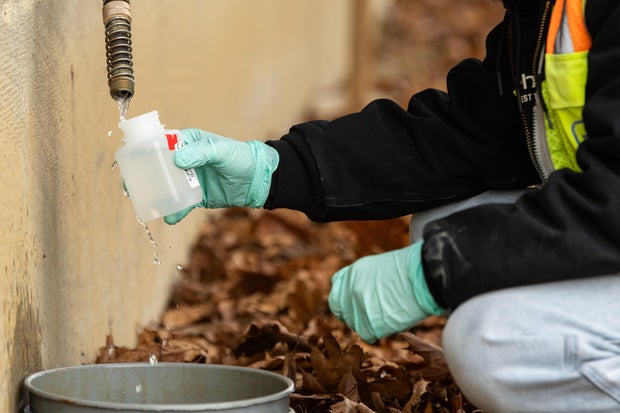
"EPA found no lead in the 38 water samples taken post-detonation at public water supplies, which included samples of finished treated drinking water and untreated water at the intake," the agency said in a press release.
"EPA sampled 35 drinking water sources across Iowa, Illinois, and Missouri before the controlled detonation to set a baseline," it added.
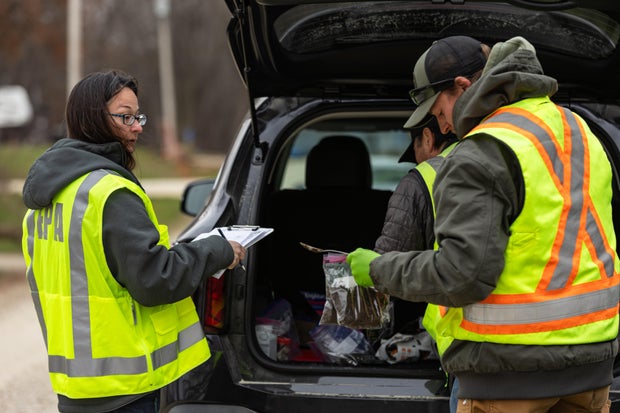
The EPA said it collected more than 1,632 air, water, soil and dust samples ahead of Wednesday's destruction of the lead azide stockpile, followed by 1,607 samples after the detonation, the agency said. Samples were sent to multiple EPA and private labs for testing.
"The agency is expecting to start receiving lab results on post-detonation sampling as early as tomorrow," the EPA said in a news release.
The EPA said it collected samples at more than 180 structures, including homes, schools, daycare centers and churches, as well as at parks, nearby farms, drinking water sources and the Mississippi River watershed.
The EPA said Friday that it had completed 88% of post-detonation sampling at homes that were sampled pre-detonation, and expected to finish the remainder Friday.
As of Thursday, no airborne lead had been detected throughout the region, the EPA said.
The agency said it is also testing for other compounds that may have been released during the detonation.
"The agency is testing for everything we were anticipating could potentially be released as a result of the controlled detonation," it said in Thursday's news release.
The Army on Wednesday detonated 5 tons of deteriorating explosives at the Iowa Army Ammunition Plant located in the small community of Middletown, citing the risk of an unplanned explosion. Local residents and environmental groups had sought to block the detonation over concerns that a plume of toxic lead dust could threaten public health and agriculture.
The Middletown plant housed about 10,000 pounds of lead azide, which has been used in ammunition since World War I. The EPA said the lead azide had degraded over the last 20 years it had been in storage. It had undergone a recrystallization process that increased "the material's sensitivity to friction and shock" and made it more susceptible to the "risk of unintentional detonation," the EPA said.
The 8th Circuit Court of Appeals temporarily halted the detonation last week while it considered whether to impose a longer-lasting ruling. On Monday, the court said the environmental groups challenging the plan had failed to show they were likely to succeed.
The chaotic lead-up to the detonation reached the White House, prompting questions within the Trump administration about what went wrong and who was to blame for not elevating the matter to senior officials sooner, sources familiar with the matter told CBS News.
President Trump praised the detonation as having "exceeded expectations."