How Ukraine's demining robots could help U.S. open the Strait of Hormuz
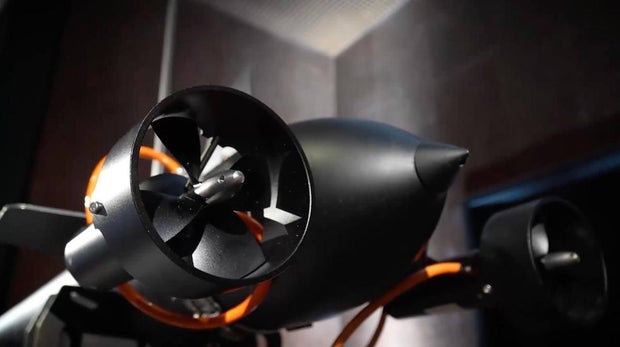
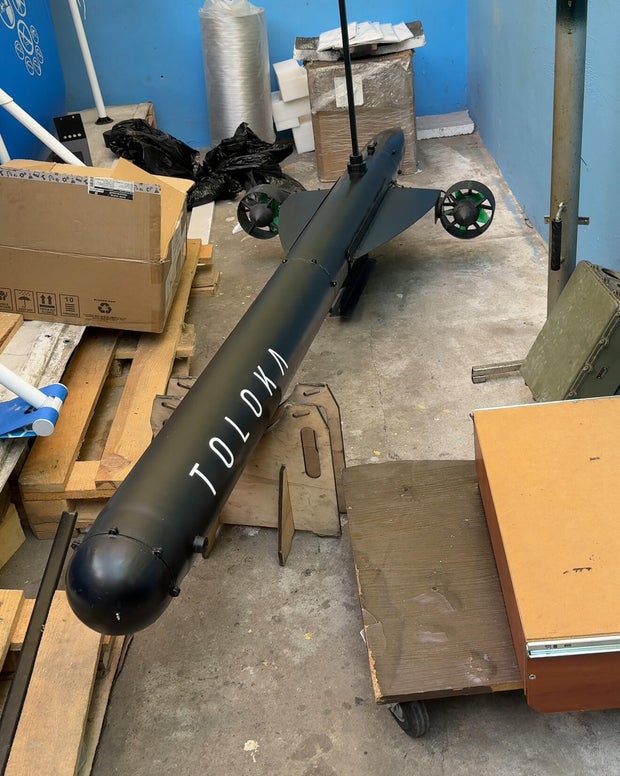
KYIV, Ukraine — The TLK-150 is eight feet long, weighs roughly 50 pounds and glides just below the surface of the Black Sea mapping out the minefields that lay below. Once it dips underwater, its rotors can churn for over 1,200 miles before needing a recharge.
The sea drone, manufactured by the Ukrainian defense company Toloka, has sailed hundreds of missions off Ukraine's coast, searching for the mines laid underwater during Russia's invasion. Now, its services may be needed in a different commercial waterway.
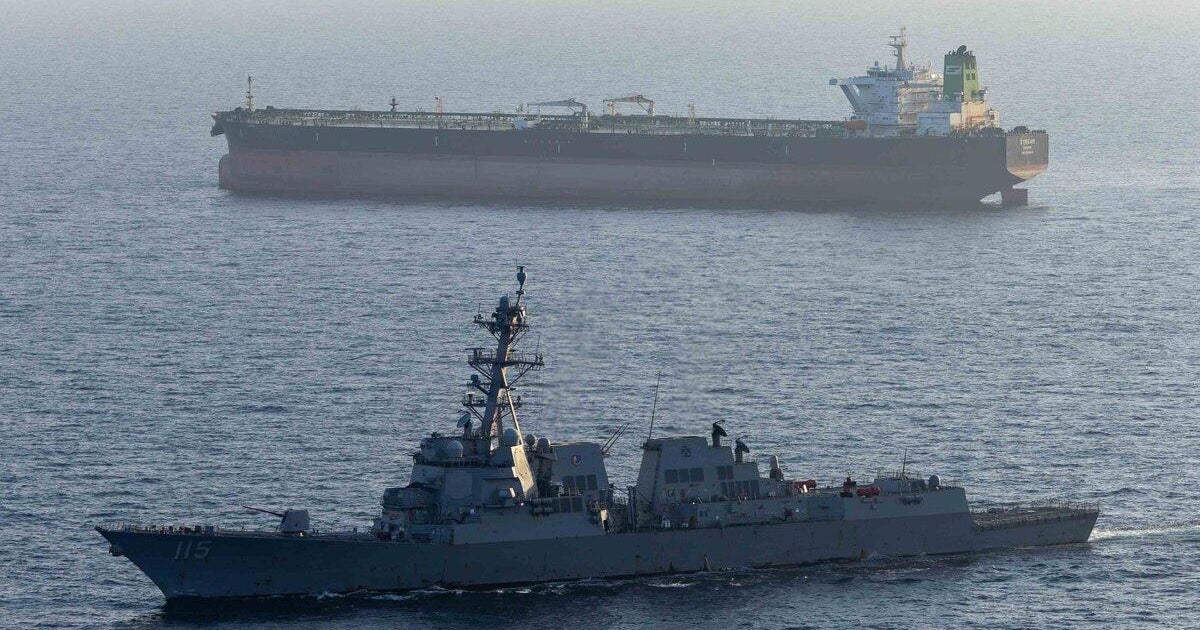
The Strait of Hormuz has remained almost entirely closed to ship traffic since Iran dropped mines across it in March. Until the explosives are cleared, the 20% of the world's energy that normally passes through the strait could remain at a standstill. This process could take months, experts say, as the U.S. does not possess the necessary homegrown tools to open the strait.
"The U.S. Navy has been neglecting the mine countermeasures mission for more than 20 years. It's a mission that gets very little attention, very little respect," said Scott Savitz, a senior engineer at Rand Corporation, who previously advised the U.S. Navy's mine warfare command.
The Pentagon told CBS News: "U.S. forces are addressing the risk of mines using manned and unmanned capabilities to ensure passage through the strait is safe."
Ukraine, on the other hand, has more recent experience in demining operations than any other country. Since 2022, Russia has dropped thousands of mines across the Black Sea, presaging Iran's Hormuz blockade by using underwater explosives to deter vessels from docking in Ukraine's Black Sea ports.
Initially, Ukraine relied on human divers to clear the explosives, but over four years it has developed innovative solutions like the TLK-150.
"Without question, Ukraine is at the cutting edge of the mine action world. Technologies being developed here will change the way humanitarian demining is done," Ed Crowther, a mine action adviser with the United Nations Development Program in Ukraine, told CBS News.
But before you can remove mines, you need to find them, and experts say the latter is often trickier than the former.
"One of the hardest questions is finding the mines in the first place," Emma Salisbury, a maritime security expert at the Royal Navy Strategic Studies Centre, told CBS News. "If you are using a GPS connection on a mine sweeper, that can be easily jammed. And once you locate them, how do you transmit this data back?"
U.S. has limited demining capabilities, experts say
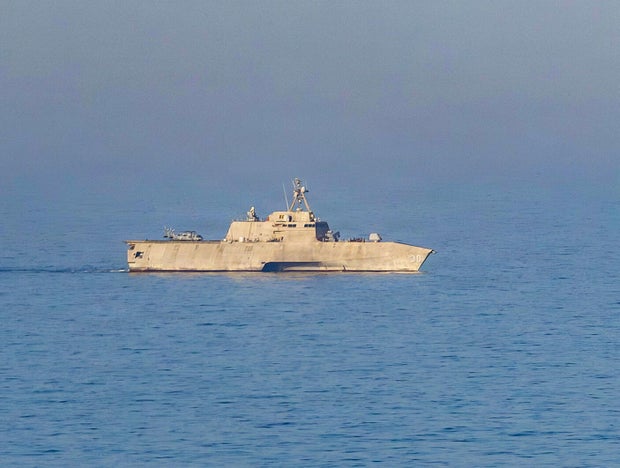
In the Strait of Hormuz, the U.S. is leaning on the Navy's Littoral Combat Ship to locate Iran's mines. The vessels deploy helicopters and sea drones that use lasers and sonar to find mines. But the ships themselves are limited in how much ground they can cover. The Navy only has two in service in the Middle East, and the vessels' metal hulls mean they must keep their distance from minefields for fear of triggering them.
"There have been questions loudly raised from the start by the mine countermeasures community about how a ship that couldn't go into a minefield because it's made of metal, will be able to map minefields," Savitz said. "You have to keep the ship an appreciable distance from any area that might be mined, and that just puts strain on the range of the mission."
The sea drones the ships deploy may also face challenges in the strait. The Littoral Combat Ship deploys unmanned systems from American manufacturers such as General Dynamics and RTX. Some of their drones resemble Ukraine's TLK-150, traveling below the surface of the water using sonar and cameras to map waterways and identify mines.
But they are imperfect instruments. During one mine sweeping training exercise in the Black Sea last year, the western UAVs failed to operate in Ukraine's wartime environment, according to two people familiar with the incident.
"They launched two UAVs, and then an air raid started, so the GPS jammers turned on, and the vehicles came to the surface, losing their GPS and their batteries ran out," said one witness. "It is very different in a wartime environment."
Ukraine's sea drones have been designed to withstand such wartime complications. The TLK-150 is the smallest of the four models manufactured by Ukrainian defense company Toloka. They serve as naval strike drones in addition to minesweepers, employing new technologies to travel farther than other sea drones, transmitting what it sees simultaneously.
The company's founder, Dima Zelenskiy, said this makes them more efficient at mapping minefields underwater than any other model.
"Using conventional methods, you need to take the vehicle out of the water and connect a USB to the drone to get the data," Zelenskiy said. "In our case, the vehicle does everything. When it detects the mines, it transmits the information. You don't have to waste extra days or weeks getting the vehicles out."
Ukrainian technology resistant to jamming
The innovation Zelenskiy said is most important to operating in a wartime environment is his system's resistance to electronic jamming. Ukraine's battlefield is the most challenging electronic warfare environment in the world, with both Russia and Ukraine deploying extensive electronic jamming systems. Even the most advanced Western drones have often failed tests in the country as their signals are jammed.
The TLK-150 solves this problem by using artificial intelligence identification tools to know where it is without relying on GPS connection. A similar technology, developed by the Ukrainian defense company Sine Engineering, recently received a multi-million dollar investment from the U.S. Development Finance Corporation, the Trump administration's international development arm.
This technology could prove useful in the Strait of Hormuz if Iran were to use electronic warfare against minesweepers.
"Iranians may not be as sophisticated as the Russians are in electronic warfare, but GPS jamming is a really easy task. You just have to generate a signal that is stronger than that of satellites," Savitz said.
Ukraine's technology is unlikely to be quickly deployed in the strait, however, as the U.S. military's acquisition system is not designed to take them on.
"If someone has a gadget that they bring to the U.S. acquisition system, then it goes through a very long series of processes, including the testing and evaluation of various kinds and lots of back and forth," Savitz said. "And then, ultimately, that system is brought into the U.S. and is acquired for use, which may be why we're not incorporating this novel technology."
Still, Ukrainian President Volodymyr Zelenskyy said Kyiv remains ready to help if the Pentagon asks for it.
"We raised this issue, because it is a painful and urgent one — as we can all see, for the entire world. There is an energy crisis. They know they can rely on our expertise in this area, and we discussed it in detail," Zelenskyy said in March, adding a week later in a post on X, "We can share this expertise with other countries, but nobody asked us to come and help with the Hormuz Strait."