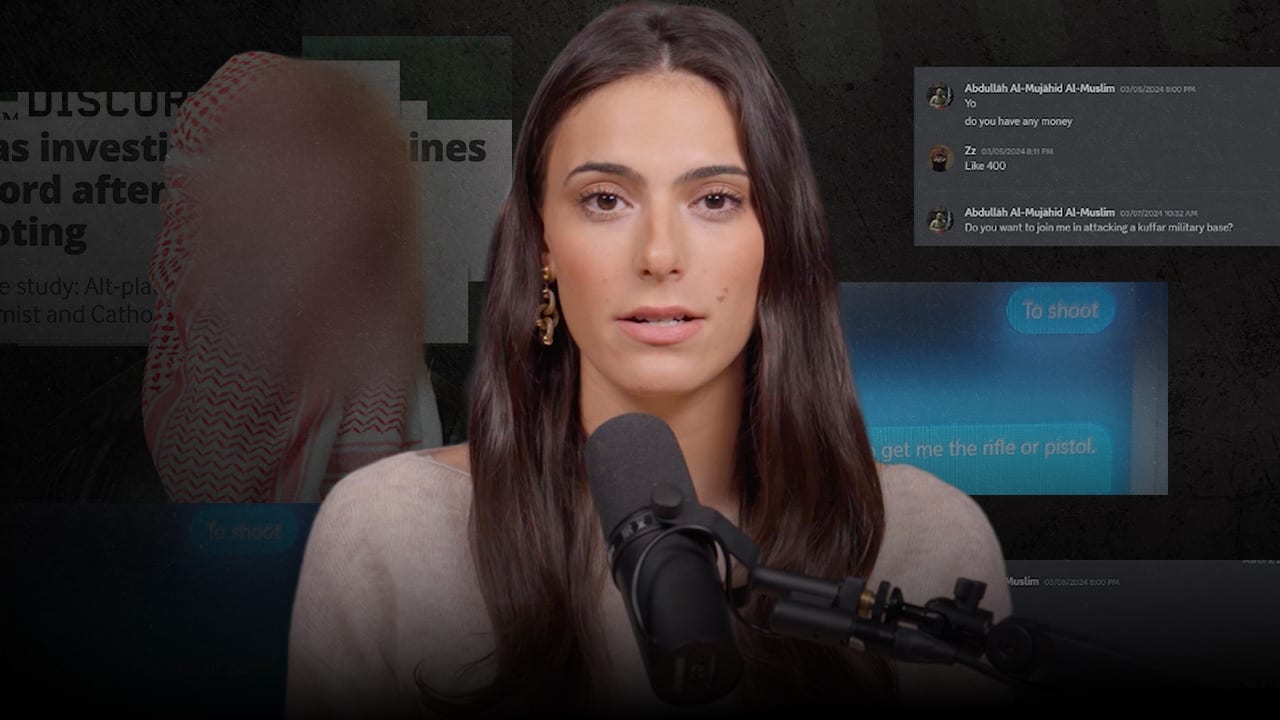
How an American teen who idolized mass shooters became one himself
In May of 2023, police officers in Jefferson, Georgia, arrived at the doorstep of Colin Gray, father of 13-year-old Colt Gray.
"We got a tip from the FBI saying that somebody from your old address… had made a threat to shoot up a school," the officer explained.
Someone had made the threat using the online chat platform Discord.
The teen came outside and stood by the doorway. He repeatedly denied making the threat. "Maybe they misheard somebody else," he said.
After the interview, the officers left. "Alright, well, look, Colt, I appreciate it. Your dad's got my card… if you hear anything, tell your dad," one of the officers said.
That year, Colin Gray gave his son an AR-15 rifle as a Christmas present.
Nine months later, the teen brought the rifle to Apalachee High School and opened fire, killing classmates Mason Schermerhorn and Christian Angulo, and teachers Richard Aspinwall and Cristina Irimie, and injuring nine others.
In July, the teen was sentenced to life in prison. His father, Colin Gray, received a 15-year sentence for ignoring the warning signs and buying the weapon.
Investigators learned the Apalachee shooter was an active member of an online subculture called the TCC, which stands for True Crime Community: an online fan club that idolizes, romanticizes and sometimes emulates mass shooters.
60 Minutes investigated the TCC for six months, easily finding violent content on platforms like TikTok, Reddit, Tumblr, Discord, and even Roblox, a video game popular with young kids.
Katherine Keneally, director of Threat Prevention at the Institute for Strategic Dialogue, has been tracking the TCC for the last two years. She told 60 Minutes correspondent Lesley Stahl that members are predominantly minors, troubled kids "who are obsessed with predominantly mass attackers who have committed school shootings and other horrific acts of violence."
A forensic psychologist testified that the Apalachee shooter had a chaotic home life: his family experienced financial instability, they moved around a lot, he was absent from school, and his parents used drugs and fought, eventually divorcing. He said the teen showed signs of paranoia, anxiety and depression.
Keneally told 60 Minutes that many young people in the TCC share experiences like feeling socially isolated or being bullied. Online, they can relate to one another and the mass shooters they idolize.
"The information that's being shared about the shooters isn't just about the attack. It's about their lives and the build-up," Keneally said.
Keneally said that some of the members start to feel a connection to these shooters – and in some cases, a parasocial relationship begins to build. She described it as "a one-sided relationship, where that individual might feel in love, or sexually attracted to an individual that might be deceased… in some cases, we see them believe that once they die, they will be with that shooter, or that they are that shooter in a new life."
The teen in the Apalachee shooting was obsessed with the mass shooter who killed students and staff at Marjory Stoneman Douglas High School in Parkland, Florida on Feb. 14, 2018 – leaving 14 students and three teachers dead, and injuring 17 people.
The Apalachee shooter had notes on his phone addressed to the Parkland shooter. He wrote: "I don't know how much longer I will be around for.. or if I'll even go through with it.. but please know I love you."
Keneally showed Stahl an image taken from the Georgia teen's room. In front of his desk, by a window, there was a shrine to the Parkland shooter: photos and newspaper clippings hung on the wall.
"This is a case where there were visible signs readily available to parents," Keneally said.
In another image, the Apalachee shooter is standing in front of a bathroom mirror with a grimaced smile, recreating a photo that Cruz took of himself. "This is a common tactic that we see…they are intending to imitate a mass shooter," Keneally said.
As Gray continued to plant a series of red flags in his offline life, he started to actively plot a mass shooting online with other TCC members.
"God, I wish we could commit together… there hasn't been a duo since Columbine," the Georgia teen wrote to one user. Another message: "I want people to remember the pain I caused and research me for hours."
Another message: "I want people to remember the pain I caused and research me for hours."
Keneally said it was clear they wanted notoriety."They had been obsessing over mass shooters. They wanna be the people that they obsess over," Keneally said.
The TCC community celebrated the Apalachee High School shooter. One user created a heart locket with the teen's picture inside. "He has had a significant influence on the TCC post his attack," Keneally told Stahl.
The teen's obsession with the TCC and quest for notoriety continued even after his arrest. In phone calls from jail, he urged his mother, Marcee, to post photos of him for his new fans.
"Send them out for me, please," he begged. "I don't care what you have to do. Give them to a reporter, anything. Make a Tumblr account. Send them out, please."
During another call with his mother, he sounded overjoyed with his new celebrity status. TCC members were comparing him to other mass shooters.
His mother Marcee found some fan art online and described it to her son, saying he was being compared to the shooters from Sandy Hook Elementary and Columbine High in the drawing. "You're on there,"
"I'm being compared with the big dogs," the teen said.
With more and more young people being drawn into these dark online fandoms, Stahl asked Keneally what parents can do to both spot and help these troubled kids.
"First, have a conversation with your teen," she said. "We see divorce. We see people not being in school. We see all these other issues occurring that… help open the door and explain a little bit more about why someone is in these communities in the first place."
"But it also comes down to knowing what your teen is doing. Does your teen have access to a device and you don't know what they're on? Are there not restrictions on their devices? Do you know what they are doing online? If they have pictures in their rooms of people up and you don't know who they are, you might maybe figure it out…. and if you think that there is an actual concern, seek help. You know, talk to teachers, counselors. Find a mental health professional," Keneally said.
"There are resources out there. You don't have to do it alone. But if you don't act, you don't intervene, then there could be a much greater tragedy."
The video above was produced by Will Croxton and Scott Rosann. It was edited by Scott Rosann. Reporting by Ashley Velie, Eliza Costas, Aria Een and Lesley Stahl.
The Institute for Strategic Dialogue provides resources for schools, parents and more.