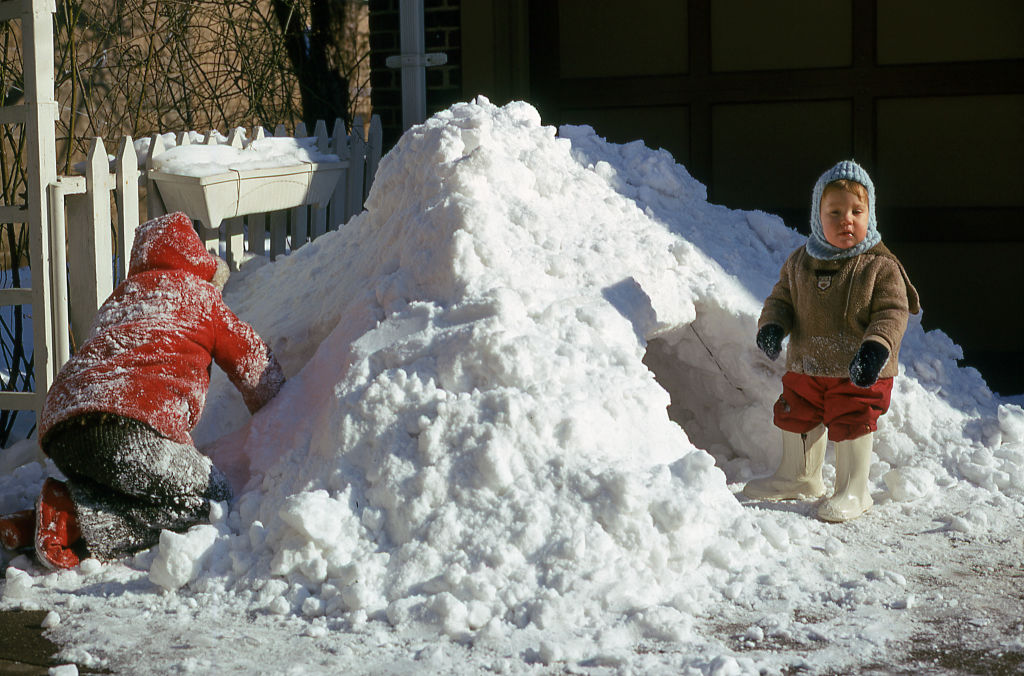
First snow of the season expected in Northeast this week amid cold snap in eastern U.S.
The first snowfall of the season is expected in parts of the Northeast later this week, although there is uncertainty over how much snow will fall and which parts of the region will be hit hardest.
Temperatures are also forecast to drop well below average for this time of year in that region and other parts of the eastern U.S., impacting a large swath of the country.
Cold snap to spread over eastern U.S. this week
A large dip in the jet stream will cause cold air to spread across the eastern half of the U.S. starting Wednesday through the end of the week, reaching from the Canadian border to the Gulf Coast. Temperatures are expected to drop between 20 and 25 degrees below average for this time of year.
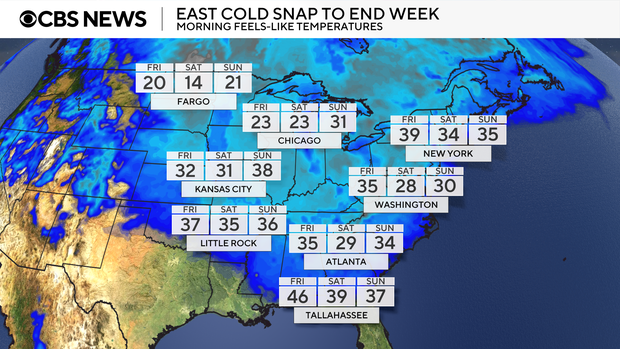
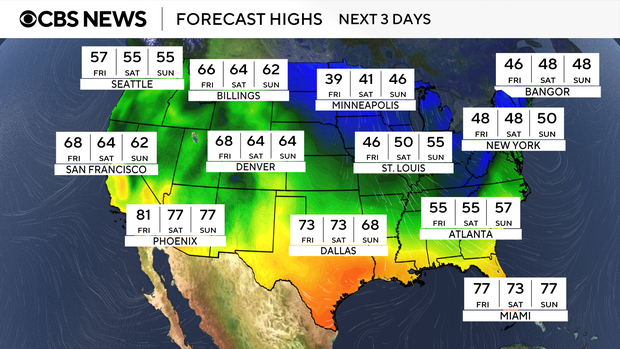
Overnight feels-like temperatures are forecast to be near or below freezing in major cities, including Chicago and Atlanta. Daytime highs will only reach the mid-30s and 40s from Thursday through the upcoming weekend.
Snowfall potential
A separate storm system developing over the Midwest on Wednesday will strengthen and head to the Northeast before the end of the week, potentially helping usher in the first snowfall of the season.
Some of the moisture associated with the storm will fall as cold rain, which is expected in cities like Boston, New York, Philadelphia, Pittsburgh and Washington, D.C., even though the I-95 corridor will likely see warmer temperatures this weekend.
But places at higher elevations and those in the interior Northeast, like upstate New York, New Hampshire and Vermont, could see their first snowfall.
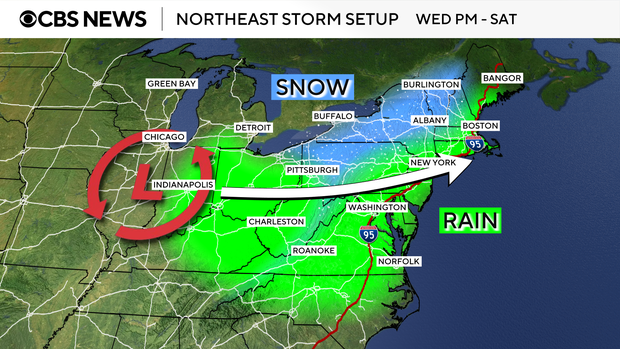
The storm is expected to move away from land once it reaches the Mid-Atlantic region. A second, smaller storm could potentially form off of that system and impact coastal areas from the Mid-Atlantic up to New England. The path of the second, smaller storm will determine how much snow or rain may fall in those areas, and exactly which locations could be affected.