Colorado Supreme Court rejects efforts to put redistricting on the ballot

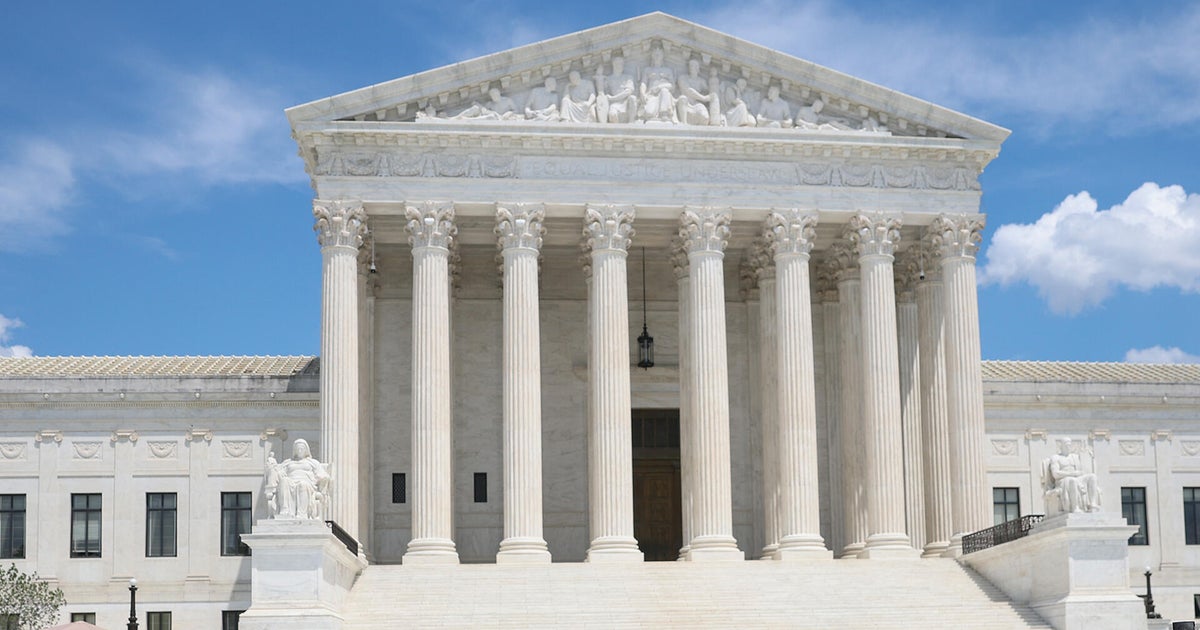
The Colorado Supreme Court on Monday delivered a major setback to ballot measures aimed at handing Democrats as many of seven of Colorado's eight Congressional seats.
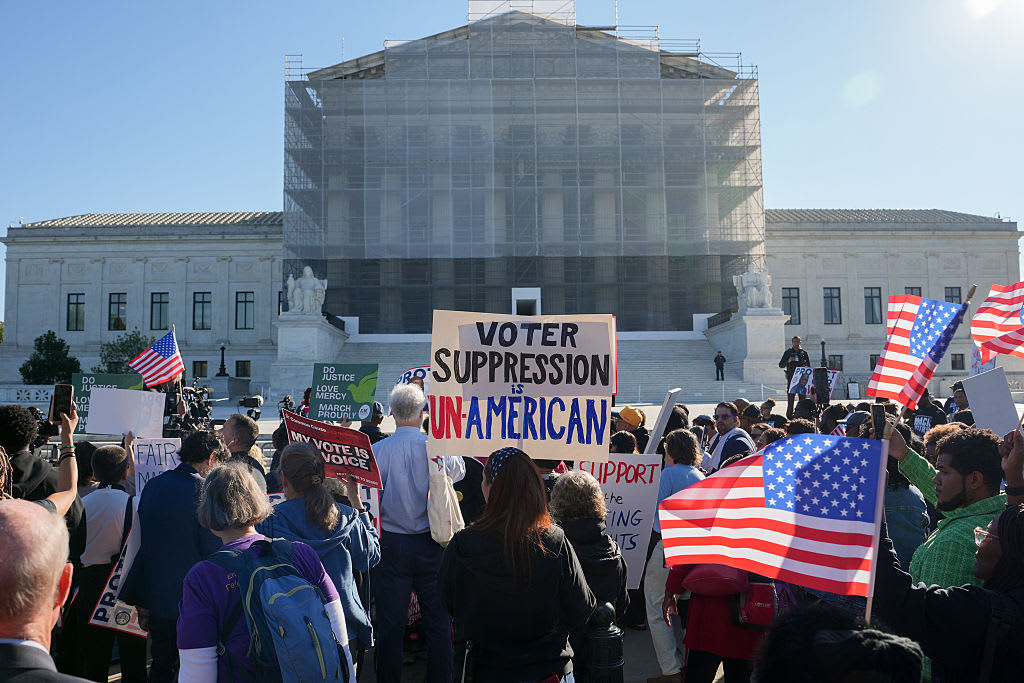
The initiatives are part of a national redistricting fight that gained momentum after President Trump urged Republican-led states to redraw their congressional maps.
So far, Republicans and Democrats in 10 states have rushed to redraw congressional district lines in the hopes of giving their party an edge in November and beyond.
The Colorado Supreme Court shot down five ballot measures in all -- three by Democrats and two by Republicans. All of them were aimed at creating new congressional district maps that favor their party. But that requires several changes to state law and the Colorado Constitution requires ballot measures address only one subject.
Former Republican Secretary of State and election law attorney Scott Gessler, who represented plaintiffs in court, says Democrats tried to circumvent the constitution by bringing two separate but interdependent measures.
"Essentially, the Democrats were manipulating the initiative process," Gessler said.
The Colorado Constitution requires an independent commission draw new congressional districts once every 10 years after the census.
Democrats wrote Initiative 241 to temporarily replace the independent commission with a commission subject to influence by the Democratically controlled legislature. They then wrote a companion measure -- Initiative 242 -- to allow a new congressional district map to be used only for the 2028 and 2030 elections to give Democrats an advantage in three congressional districts now held by Republicans.
But for either initiative to take effect, both needed to pass.
Justice Richard Gabriel wrote the opinion for the Colorado Supreme Court saying, "...when a measure's effectiveness is expressly contingent on the passage of a separate and independent measure, the measure contains multiple subjects, just as if the measures were combined into one..."
Gessler says he wasn't surprised by the ruling.
"If the court allowed the Democrats to manipulate the initiative process this cycle by forcing Colorado voters to accept or reject a package deal, then it would have opened the door up to manipulation in the future," he said.
The court overruled the Colorado Title Board, which had approved Initiatives 241 and 242, but denied an almost identical measure by Republicans (Initiative 328) that had a map favorable to them.
"Same legal principles, same initiative, and the Title Board came out with two different ways. You can't defend that in court," said Gessler.
The Colorado Supreme Court also overruled the Title Board on two other initiatives that changed the commission and map in one measure. Justice Monica Marquez wrote the opinion for the Court on Initiatives 240 and 327 saying, "...changing the constitutionally mandated frequency of redistricting -- however temporary the change -- is not merely a mechanism to administer the new congressional district map. Instead, it represents a seismic shift to Colorado's longstanding redistricting process enshrined in the state constitution."
Curtis Hubbard, spokesperson for Coloradans for a Level Playing Field -- the group behind Initiatives 241 and 242 released a statement saying, "The success of this partisan attempt to sideline Coloradans from responding to Donald Trump's unprecedented mid-decade redistricting scheme is disappointing. While Trump and his MAGA allies regularly sidestep the law and ignore voters, efforts to respond have once again been dealt a legal setback over a technicality."
Right now in Colorado's eight Congressional districts, Democrats hold four seats and Republicans hold four seats.
There isn't time for proponents to get a new measure on this year's ballot and state law requires any measures brought in odd years be limited to questions related to the Taxpayer Bill of Rights (TABOR).