CPI surged in April as inflation soars to highest level in almost 3 years
Inflation accelerated in April to an annual rate of 3.8%, the highest since May 2023, as the Iran war pushed up energy costs and raised prices across the economy.
By the numbers
Economists predicted inflation would jump to 3.7% on an annual basis, up from the 3.3% reading in March, according to a FactSet poll.
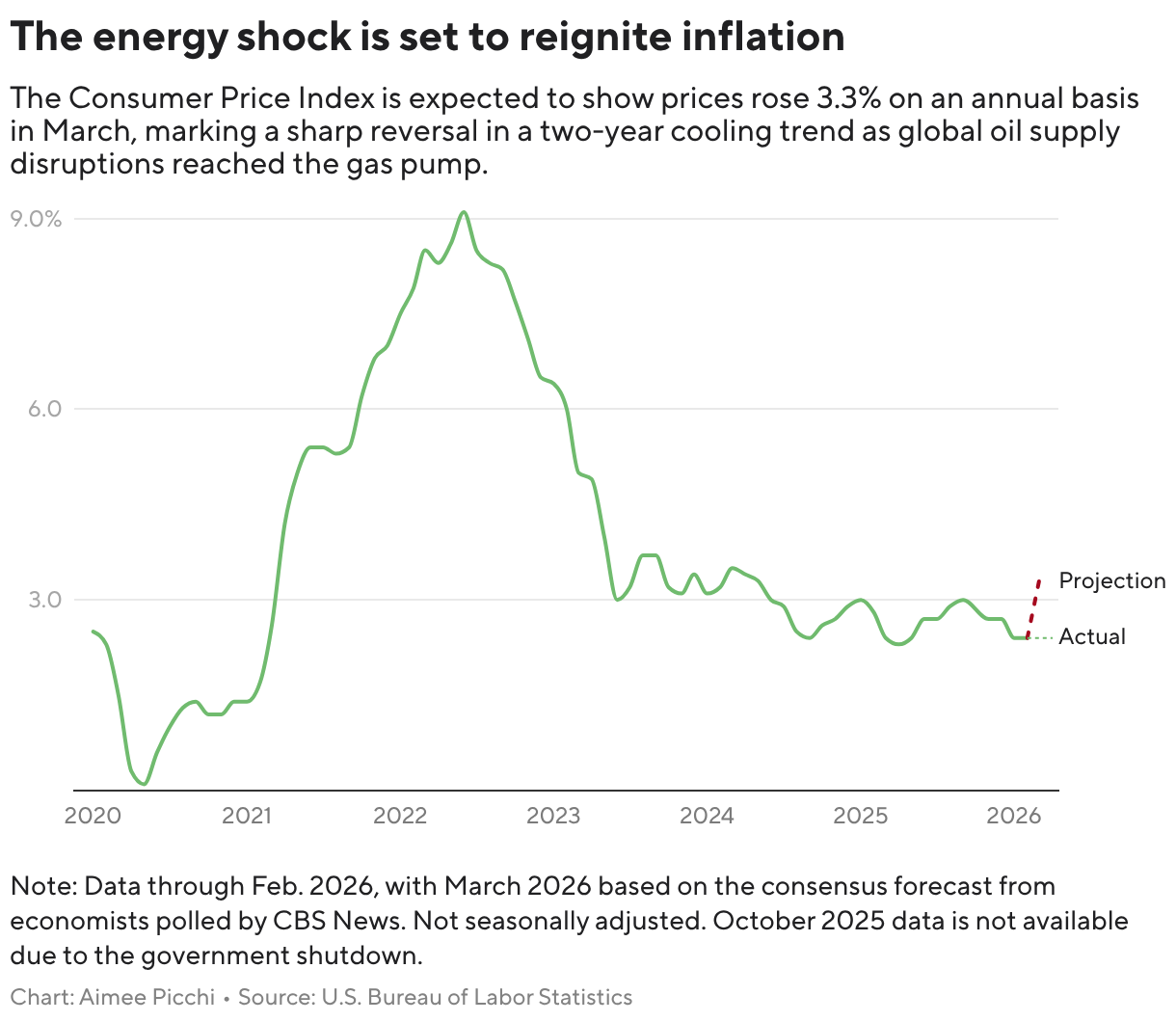
The CPI, a basket of goods and services typically purchased by consumers, tracks price changes over time. Inflation rose 0.6% in April from the prior month.
Energy prices were the major driver, accounting for 40% of the total CPI increase, according to the Labor Department. On an annual basis, gasoline prices jumped 28.4% from a year earlier.
The Iran war has constrained global oil supplies since breaking out in March, sending gas prices to their highest levels since July 2022 and raising transportation costs for drivers and businesses. Airline fares also saw a significant jump in April, rising 20.7% on an annual basis.
Core inflation, which excludes volatile food and energy prices, rose 2.8% from a year earlier, suggesting price pressures are also spreading beyond fuel costs.
President Trump told CBS News in a phone interview on Monday that his administration would suspend the federal gas tax — which is 18.4 cents per gallon for regular gas and 24.4 cents per gallon for diesel — "for a period of time." However, experts say that the move may only provide limited relief to U.S. motorists.
In the Monday interview, the president also rejected the idea of a bailout for U.S. air carriers dealing with higher jet fuel costs. Many carriers have hiked their ticket prices due to higher fuel costs, dealing a blow to Americans at the start of the summer travel season.
What the experts say
Consumers are struggling with the sharp increase in fuel costs, which have added an extra $75 a month to the typical household's expenses, said Heather Long, chief economist at Navy Federal Credit Union, in an email.
"Inflation is the key drag on the U.S. economy now," Long said. "This is hurting Americans. There is a real financial squeeze underway. For the first time in three years, inflation is eating up all wage gains."
Mark Zandi, chief economist at Moody's Analytics, expects inflation to keep accelerating through the summer even if the conflict ends in the next few weeks, before falling to 3.3% by year-end.
Higher energy prices from the war will increase the cost of groceries and other goods delivered by diesel-powered trucks, he told CBS News before the CPI release.
"The pass-through will broaden to nearly all manufactured goods, which are energy-intensive, as well as to agriculture and construction," he said in an email.
What does it mean for the Fed and interest rates?
With inflation rising and the labor market at a standstill, it's "very unlikely" that the Federal Reserve will be able to cut interest rates anytime soon, Chris Zaccarelli, chief investment officer for Northlight Asset Management, said in an email.
Last week, the Bank of America adjusted its forecast, predicting that the Fed won't lower interest rates until the second half of 2027.
CME Group's FedWatch tool, a measure of financial market sentiment, shows a less than 50% chance of rate cuts until March 2027.