Trump DOJ sues Minnesota over state's efforts to regulate greenhouse gas emissions
The U.S. Department of Justice on Monday sued Minnesota over what it calls "its attempts to regulate global greenhouse gas emissions," a move that follows the state's decision to sue the Trump administration for removing federal emission standards earlier this year.
In late February, the Environmental Protection Agency officially announced the repeal of its own 2009 Endangerment Finding, which led to the implementation of regulations on hazardous emissions from vehicles, aircraft, power plants and pollution from gas and oil extraction facilities, among other industries and sources.
President Trump touted the repeal as the "single largest deregulatory action in American history," calling the Endangerment Finding "a disastrous Obama-era policy that severely damaged the American auto industry and massively drove up prices for American consumers."
Later in February, Attorney General Keith Ellison announced Minnesota was joining about 40 other states, counties and municipalities in suing the federal government over the repeal.
"The Trump administration continues to contradict settled science and settled law in its ongoing work to make Americans less healthy so billionaires can be more wealthy," Ellison said.
In early April, President Trump announced an executive order called "Protecting American Energy from State Overreach," which bars "state and local governments" from trying to "regulate energy beyond their constitutional or statutory authorities."
DOJ rails against what it calls Minnesota's "woke climate preference"
The justice department sued Hawaii, Michigan, New York and Vermont on Monday for violating the executive order by "suing fossil fuel companies in state court to seek damages for alleged climate change harms."
Regarding its similar suit against Minnesota, the justice department explicitly zeroes in on what it describes as Ellison's participation in the lawsuit "that usurps exclusive federal authorities and unreasonably burdens domestic energy development."
"President Trump promised to unleash American energy dominance, and Minnesota officials cannot undermine his directive by mandating that their woke climate preferences become the uniform policy of our Nation," said Stanley Woodward, an associate attorney general.
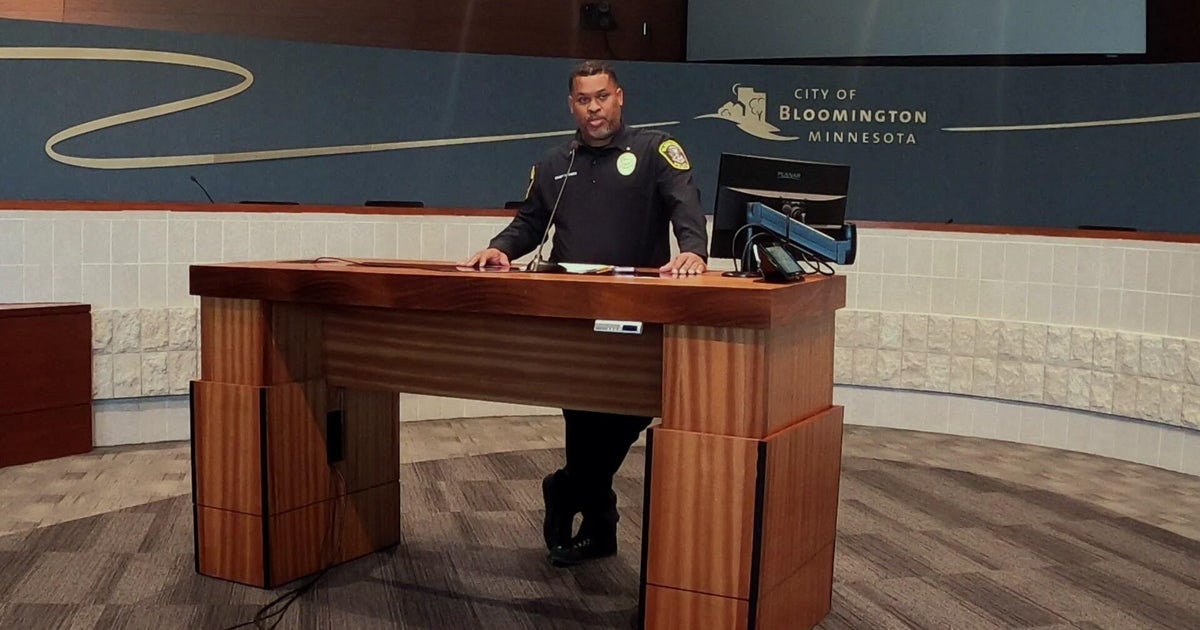
Ellison gave this statement to WCCO regarding the lawsuit:
"In 2020, I sued Big Oil for lying to Minnesotans about the true causes of climate change, then sticking us with the bill for the harms it is causing. Six years later, we are still waiting to go to trial because Big Oil has pulled every procedural trick in the book to delay facing the consequences of their unlawful actions. This frivolous and meritless lawsuit is just their latest attempt to hide from accountability, and I will move to have it dismissed immediately. The American people deserve a Department of Justice that fights for us, and it's a tremendous shame that Trump's DOJ would rather sell us out to Big Oil."
A closer look at the Endangerment Finding
In 2007, the U.S. Supreme Court ruled that the EPA had the authority to regulate greenhouse gas emissions under the Clean Air Act, directly leading to the release of the Endangerment Finding two years later.
The monumental report highlighted that emissions from carbon dioxide, methane, nitrous oxide, hydrofluorocarbons, perfluorocarbons and sulfur hexafluoride are major threats to public health.
An EPA report released in the final weeks of the Biden administration noted that since 2011, regulations have led to the creation of new passenger vehicles that omit 24% less harmful emissions. Another EPA report released around the same time estimated that emission regulations will provide $2 trillion in savings over the next three decades in fuel cost savings and public health benefits.
Lee Zeldin, who now runs the EPA under Mr. Trump, claimed in the first weeks of the president's second term that a repeal of the Endangerment Finding will "undo the underpinning of $1 trillion in costly regulations," and "save more than $54 billion annually."
Gina McCarthy, who led the EPA during the second Obama administration, said Zeldin and the administration are "trying every trick in the book to deny and avoid their mission to protect people and the environment from the ravages of unchecked climate pollution."
Climate change experts have also blasted the repeal, with Cornell University professor Robert Howarth calling the move "criminal negligence."
"The science was clear in 2009 and has become much stronger and clearer since: climate disruption is a large and growing problem," Howarth said. "It is caused primarily from our use of fossil fuels and the resultant emissions of carbon dioxide and methane, and it is a deadly problem."
Dr. Gretchen Goldman, who leads the Union of Concerned Scientists, went further in her disdain for the repeal, saying it's "an obvious example of what happens when a corrupt administration and fossil fuel interests are allowed to run amok."
What will likely happen next?
The back-and-forth lawsuits involving the Endangerment Finding's repeal are expected to drag on for some time, with legal experts doubtful the Trump administration will succeed since all similar challenges have failed in federal court.
The current legal squabbles are expected to eventually wind up before the U.S. Supreme Court, which has a much more conservative-leaning bench than it did during the 2007 ruling. In 2022, the court ruled in favor of limiting how the Clean Air Act can impose regulations on some power plant emissions.
As for businesses, experts also doubt the repeal will lead to many policy reversals.
"Business operates on a far longer time scale than the four-year cycle of presidential elections," said Cornell University business professor John Tobin-de la Puente. "And to rely on the current administration's announced action would be imprudent, especially given the substantial likelihood that the next administration will once again regulate carbon emissions."