Strengthening El Niño, climate extremes pose flooding risk for Southern California
After what was one of the wettest winters Southern California has seen in years, the combination of a strengthening El Niño and climate extremes could bring a strong chance of flooding to the region.
With the potential of back-to-back wetter than average seasons hitting the area, KCAL News meteorologist Marina Jurica is warning locals to be ready for anything, especially after a series of devastating landslides that hit in the months following the unprecedented amount of rain.
Weather models currently show a heightened chance of above average precipitation for both Central and Southern California, as the El Niño-enhanced southern jet stream and moisture form over the Pacific Ocean.
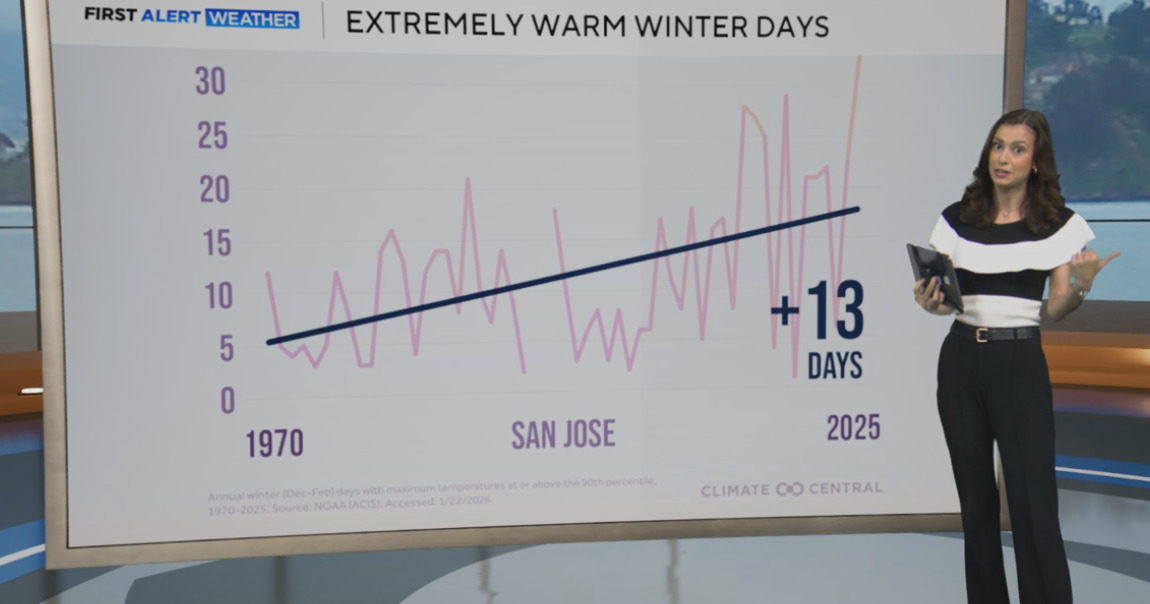
However, an El Niño isn't the only thing in play for the Golden State, as an extraordinary amount of ocean warmth has been developing in several regions as a result of global warming. While it's typical for El Niño to create warm areas in the tropical Pacific Ocean, the number of regions experiencing uncharacteristic warmth is due to something different altogether: global warming.
Meteorologists believe that the combined power of the two could either bring considerable impacts to the West Coast, enhancing the usual attributes of an El Niño, or interfere with the traditional effects of the wet weather movement.
Jurica says that the coming season will play out in one of two ways: either the warm mid-latitudes playing with the tropical Pacific El Niño will offset the production of storms or it could increase the strength of Pacific storms, bringing warmer and wetter weather.
While it's not unheard of for California to experience tropical moisture in late summer or early fall, or for an El Niño in winter, it's not entirely a common occurrence.
There have been nine years that match that exact criteria, just three of which — 1986, 2009 and 2015 — were going into a strong to moderate El Niño pattern, and only one of those years saw above average rainfall.
So, despite the looming prediction of increased precipitation, global warming may actually counteract with the El Niño and California may not see an unusual amount of rain at all.
When it comes to fire season, the high amount of rain largely decreased the likelihood of devastating wildfires, which appeared to ring true in 2023, when fires only burnt one-fifth of the average acres burned over the last five years.
For stories about how winter is changing across the country, and to watch the documentary 'On the Dot' please visit Arctic melting foreshadows America's climate future.