U.S.-Iran Latest: Talks pause for slain ayatollah's funeral after Trump and mediators claim progress
What to know about the Iran war today:
- Qatari and Pakistani mediators said Thursday that the next meetings between Iranian and U.S. negotiators would be scheduled "at the earliest possible time" after funeral commemorations for Iran's former supreme leader. Ayatollah Ali Khamenei was killed in U.S.-Israeli strikes on Feb. 28, and his funeral is to last from July 4 until July 9.
- Iran's chief negotiator called Thursday on Iranians to avenge Khamenei's killing by coming out en masse for funeral events. Iranian authorities say 15-20 million people and representatives from 30 countries are expected to attend.
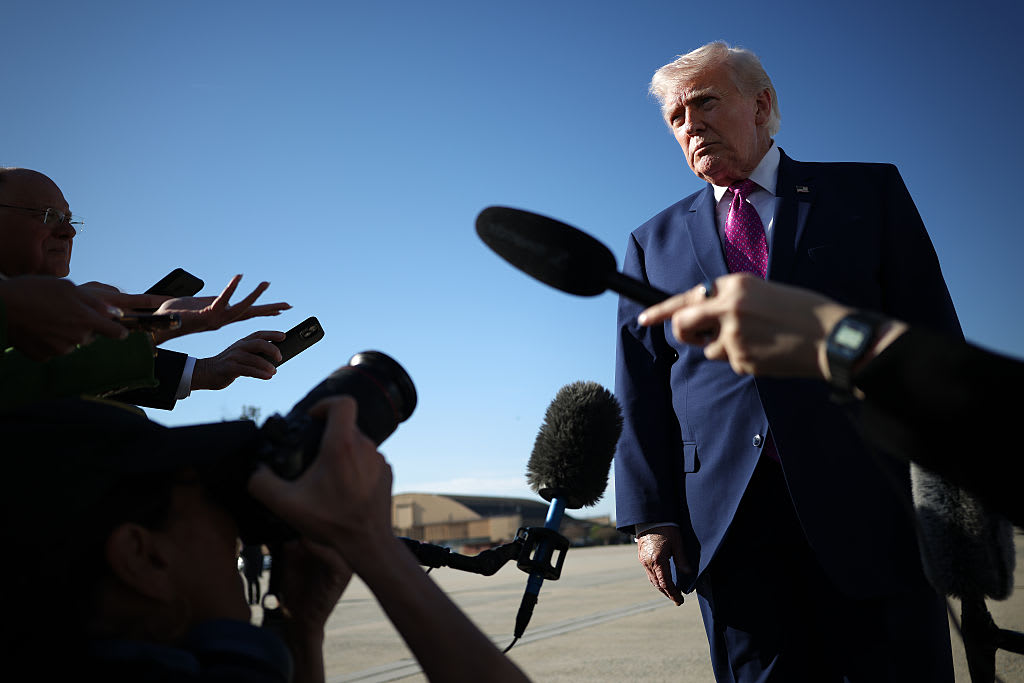
- President Trump said there was progress Wednesday as U.S. and Iranian officials resumed talks in Doha, via mediators, telling reporters "the denuclearization of Iran is moving along well." Qatar and Pakistan also say "positive progress was made."
U.S.-Iran negotiations have "not wrestled with the toughest issues," analysts say
President Trump struck a positive note Wednesday when describing indirect talks between U.S. and Iranian officials in Qatar, saying "the denuclearization of Iran is moving along well."
The memorandum of understand that both sides signed on June 17 committed them "to negotiating and achieving" a final deal to formally end the war in a "maximum 60 days."
This week was only the second time the two sides have engaged since then, and Robert Murrett, an academic and former U.S. Navy Vice-Admiral, says "the negotiations that have taken place thus far have not wrestled with the toughest issues."
Iran's hope to retain some nuclear enrichment capacity, and how its existing stockpile of highly-enriched uranium can be removed or destroyed, are among the major points still to be resolved.
They "have been largely deferred to later discussions," Murrett said.
It's hard to know how much progress the talks have really made, Mark Cancian, a retired Colonel in the U.S. Marines Corps who's now a senior adviser with the Center for Strategic and International Studies, told CBS News on Thursday, "since little information has been provided, and there are frequent public disagreements between the United States and Iran over what was agreed to."
"There seems to be a potential deal on the table regarding nuclear materials," he added. "Iran would agree not to enrich for 10 to 15 years, would downblend its existing enriched uranium, and allow some sort of international monitoring. Maybe the nuclear materials would be held by a third country."
"The Strait of Hormuz is a more difficult issue because the two sides have irreconcilable demands," said Cancian, referring to the strategic waterway that Iran largely closed-off right after the war started.
"Iran demands recognition of its sovereignty over the Strait, jointly with Oman, while the United States demands complete freedom of navigation, which has been the practice to date."
Top Syrian diplomat reassures Lebanese leaders on Beirut visit
Syrian Foreign Minister Asaad al-Shaibani told Lebanon's president Thursday that Damascus had no intention of intervening militarily in his country, according to the Lebanese presidency, despite U.S. pressure to do so.
Shaibani is visiting Beirut, where he met parliament speaker Nabih Berri, an ally of the Iranian-backed Hezbollah group based in Lebanon, for the first time.
President Trump has repeatedly said Syria could "take care of Hezbollah," criticizing Israel's strategy in its war with the U.S.-designated terrorist group.
But Syrian President Ahmed al-Sharaa has said he has no intention of intervening.
Shaibani told Aoun he wanted "to clear up the confusion sparked by reports of a potential Syrian military intervention in Lebanon," adding that Syria has "no intention of undertaking such a move," according to the statement from the Lebanese presidency.
After meeting Berri, al-Shaibani told reporters he would not rule out the possibility of a meeting with Hezbollah officials in the future.
Syria's new government, led by Sharaa, is hostile to Hezbollah, which was allied with the country's former longtime dictator Bashar al-Assad, and it has announced arrests of alleged cells affiliated with the group.
Hezbollah denies having any presence in Syria.
Since late 2024, Hezbollah's former Syrian supply routes have been cut and Damascus authorities say several attempts to smuggle weapons to Lebanon have been foiled.
CBS/AFP
Analyst says 60-day U.S.-Iran negotiating period likely to be extended
The memorandum of understanding between the U.S. and Iran signed on June 17 gave them 60 days to reach a wider deal to end the war, but that period is likely to be extended, an analyst tells CBS News.
Under the terms of the MoU, both sides committed "to negotiating and achieving the final deal" to formally end the war in a "maximum 60 days."
So far, the two sides have engaged only twice – once directly, once indirectly, and negotiations have now stopped for at least a week for the funeral of Ayatollah Ali Khamenei, the former Iranian supreme leader killed by a U.S.-Israeli strike on the first day of the war.
The key issue of Iran's denuclearization, which the MoU lists among the matters to resolve during the 60 days of talks, seems barely to have been touched.
The negotiation period, according to the terms of the MoU, is "extendable with mutual consent."
And Robert Murrett, an academic and former U.S. Navy Vice-Admiral, told CBS News on Thursday that "many of us expect that there will be extensions after the initial 60-day period."
Iran and U.S. appear to prioritize Strait of Hormuz, "delaying discussions" on Iran's nuclear program, analyst says
President Trump and mediators from Qatar and Pakistan said progress was made during this week's indirect U.S.-Iran talks in Doha, only the second time the two sides have engaged since they signed a memorandum of understanding to extend a ceasefire on June 17.
But do we have any indication that difficult issues like Iran's nuclear program and the lifting of sanctions were actually tackled? Was there real progress, or did the discussions this week go back over already trod ground?
"In Doha this week, both sides supposedly discussed the future administration of the Strait of Hormuz by Iran in dialogue with Oman," Eric Lob, a nonresident scholar in the Carnegie Middle East Program, told CBS News. "They also apparently addressed unfreezing billions of dollars in Iranian assets in Qatar and elsewhere."
Both of those matters are included in the 14 points of the memorandum signed two weeks ago.
And despite President Trump's remark on Wednesday that "the denuclearization of Iran is moving along well," Lob said "it does not appear that the issue was tackled in an in-depth manner, if at all."
"Both sides seem to be prioritizing the Strait of Hormuz and delaying discussing the complex and contentious nuclear program," he said.
Mr. Trump has pushed hard for ship traffic through the strait to return to pre-war levels, as the constrained flow of oil and gas tankers drove up global energy prices significantly. The war saw Iran effectively shut down the waterway, while the U.S. blockaded Iranian ports and ships in response.
"Earlier in the talks, President Trump stated he would be willing to be flexible with the 60-day deadline involving the nuclear issue," said Lob. "It will likely take more time for both sides to reach a comprehensive agreement, given it took President Obama and his administration approximately two years, if not longer, to do so with the Joint Comprehensive Plan of Action in 2015."
"Then again, President Trump and his administration are not starting from scratch. Since 2025, they have engaged in two rounds of negotiations with Iran, which were both abruptly interrupted by Israeli and American attacks."
When did the 60 days start? Shorter timeline for talks "serves Iran's interests," analyst says
With the largely indirect negotiations between the U.S. and Iran entering a pause of at least a week for the funeral of Iran's slain supreme leader Ayatollah Ali Khamenei, some key questions about the talks remain unanswered.
Under the terms of the memorandum of understanding signed two weeks ago, both sides committed "to negotiating and achieving the final deal" to formally end the war in a "maximum 60 days, extendable with mutual consent."
But when exactly did the countdown begin, and how many days of actual talks can be counted?
"The Iranians seem to think the 60-day negotiating period started in mid-June with the signing of the memorandum of understanding," Eric Lob, a nonresident scholar in the Carnegie Middle East Program, told CBS News. "During indirect negotiations in Doha this week, the Iranians supposedly stated that they would impose tolls on oil tankers, container ships, and other commercial vessels transiting through the Strait of Hormuz in mid-August, after the 60-day window ended."
The MoU was intended to completely reopen the Strait of Hormuz to international shipping and end the fighting in Iran - and in Lebanon - while negotiators got down to the more contentious issues, including Iran's nuclear program, during the 60 days of talks.
So far, U.S. and Iranian negotiators have engaged only twice since the agreement was signed on June 18 - once for direct talks in Switzerland on June 21, and this week, via mediators, for a day in Qatar.
Neither the U.S. nor Iran have said whether only those two days count against the 60 provisioned by the MoU, or if they are counting all 14 days since it was signed.
It's also unclear if the two sides are even counting the same way, but Lob said that given the terms of the MoU, which prohibit Iran from collecting any fees from ships in the strait during the negotiations, for instance, Tehran may be crossing days off on the calendar, regardless of what talks are actually taking place.
"Unlike with the nuclear issue, a condensed timeline serves Iran's interests by formalizing its control over the strait and reaping the financial benefits from it sooner," said Lob, "especially with all the economic challenges Tehran confronts."
Lebanon will not yield "a single inch" of territory to Israel, says president
Lebanon will not surrender "a single inch" of territory to Israel, President Joseph Aoun said Thursday, defending negotiations with Israel.
"We will not relinquish a single inch of Lebanese land," he said in a statement posted by the country's presidency on X, "and let judgment be passed on us through implementation, for the goals we have set before our eyes do not differ from the goals of all Lebanese."
"I commend the tremendous effort exerted by the Lebanese negotiating delegation, both civilian and military, in the American capital," he added, referring to talks between Lebanon and Israel in Washington.
Israeli Defence Minister Israel Katz said Wednesday that Israeli troops would remain in Lebanon, Syria and the Gaza Strip in so-called security zones "until further notice."
Hezbollah has called negotiations with Israel "appeasement."
Cathay Pacific to resume Middle East flights
Hong Kong's flagship airline Cathay Pacific announced Thursday that it will resume flights to the Middle East, after the United States and mediators in talks with Iran said that there had been progress in negotiations.
Following the two sides' indirect discussions in Doha on Wednesday, President Trump, as well as Qatar and Pakistan, signaled that diplomacy was holding, despite exchanges of fire earlier in the week.
Cathay suspended flights to Dubai and Riyadh at the end of February after the war broke out.
The airline has raised fuel surcharges several times as the conflict has driven up oil prices.
It said Thursday it would resume daily passenger flights to Dubai and four-times weekly passenger flights to Riyadh from September 1. Freighter services to Riyadh will resume from August 1.
"Cathay will continue to closely monitor the evolving situation in the Middle East prior to the resumption dates," the company said.
CBS/AFP
Iran chief negotiator calls to avenge supreme leader's death with massive funeral turnout
Iran's chief negotiator Mohammad Bagher Ghalibaf called on Thursday for massive turnout at Ali Khamenei's funeral to avenge the supreme leader's death in U.S.-Israeli strikes at the start of the war.
"I invite all the Iranian people ... to write a glorious page in the history of Islamic Iran through your presence" at the funeral ceremonies starting Saturday, said Ghalibaf, who is also Iran's parliament speaker.
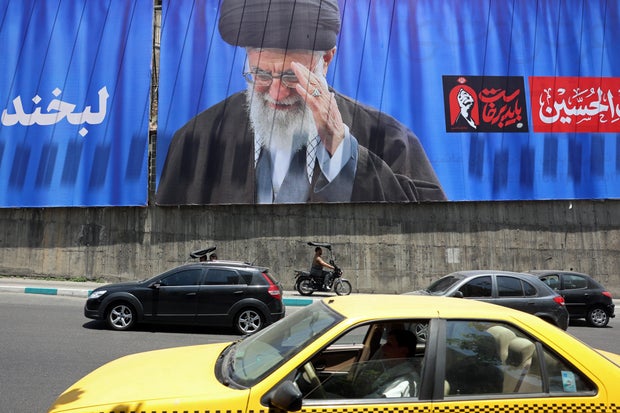
"The nation's call for vengeance must ring in the ears of the whole world," he added in a statement.
Khamenei's funeral, initially delayed at the height of the war, will take place after President Trump and Qatari and Pakistani mediators claimed there had been positive progress in indirect talks this week.
The ceremonies are expected to draw between 15 and 20 million mourners, according to officials, which would make it the biggest state funeral in the country's history.
Iran "is preparing to experience one of the most significant moments in its history," Ghalibaf said.
It remains unknown if Khamenei's son and successor Mojtaba, who has not been seen in public since becoming supreme leader, will be present.
Representatives from around 30 countries are expected to attend the funeral, with people pouring in from neighbouring Iraq, Afghanistan and Pakistan.
CBS/AFP
Pakistan says prime minister to attend Iran supreme leader's funeral
Pakistan's Prime Minister Shehbaz Sharif will attend the funeral of the slain Iranian supreme leader Ali Khamenei this week, the South Asian nation's foreign ministry said on Thursday.
"The Prime Minister, Muhammad Shehbaz Sharif, will go to Iran and Turkey from 3-5 July ... he will go to Iran first for (the) supreme leader's funeral," ministry spokesman Tahir Andrabi told reporters.
Pakistan has been mediating between the United States and Iran to end the regional war which began in February with U.S.-Israeli strikes that killed the 86-year-old Iranian supreme leader in Tehran.
The public funeral will begin on Saturday, with his body lying in state at the colossal complex in central Tehran that hosts major Friday prayers, official ceremonies and religious gatherings.
Pakistan shares deep historic ties with Iran. The two share a 560-mile border and cultural links, with Sunni-majority Pakistan home to the world's second-largest Shia population after Iran.
Sharif's trip to Turkey would involve meetings with Turkish leadership and businesspeople, Andrabi said.
AFP
H.R. McMaster says Iran is "getting everything that they wanted"
As President Trump touts progress in indirect U.S.-Iran talks, former Trump national security adviser H.R. McMaster expressed skepticism on "The Takeout with Major Garrett," arguing the diplomatic push is giving Iran a chance to refill its coffers.
McMaster, a CBS News contributor, said "Iran is the one making the progress in these negotiations because they're receiving big paychecks."
He noted that the U.S. lifted sanctions on Iranian oil and has floated unfreezing Iranian assets, which McMaster said could help Iran rebuild its military and rearm its regional proxies.
"They're getting the infusion of cash they desperately needed to get themselves up off the mat," said McMaster, who believes Mr. Trump's initial decision to go to war with Iran was correct.
Earlier Wednesday, when asked about reports that he had mulled a return to war with Iran, the president said "I think they've come a long way" and expressed optimism about Iran's compliance with the 60-day U.S.-Iran memorandum of understanding.
McMaster argued, "The Iranians have come a long way because they're getting everything that they wanted."
Qatar and Pakistan say "positive progress" made, talks now paused for funeral of Iran's former supreme leader
Qatar and Pakistan said Tuesday that "positive progress was made" during indirect talks between the U.S. and Iran in Doha, Qatar's capital "regarding issues related to the memorandum of understanding" that continued the Iran war ceasefire.
"Qatar & Pakistan mediators concluded separate meetings with the US & Iranian negotiators in Doha today, with positive progress made on issues related to the Islamabad Memorandum of Understanding, building on the outcomes of the Lake Lucerne Summit," Qatari Ministry of Foreign Affairs spokesman Majed Al Ansari, and Pakistan's foreign ministry, said in a joint statement shared on social media. "The parties agreed to continue discussions over the coming period, with the next meeting to be scheduled at the earliest possible time following the funeral processions of the former Iranian Supreme Leader."
Vance talks negotiations, won't rule out return to full-fledged war
Vice President JD Vance said talks are going well in Doha, but would not take a return to full-scale military action off the table, saying it lies in the hands of Iran.
"I can't commit to anything, because obviously it depends on what the Iranians are ultimately going to do," Vance told reporters after speaking to Marines at Naval Air Station Oceana in Virginia. "As I said up there, what I can commit to is the president's not going to send our military back in unless he has to, unless there's a clearly defined purpose for it."
"If we've got to do more, of course, that's kind of up to the Iranians," he added. "If they try to rebuild their nuclear program, if they try to start shooting at commercial vessels again, that's going to change our calculus. But right now, what the president has said is, 'Go and make a deal, go and negotiate in good faith,' and that's what he's empowered us to do."
Vance's comments also seemed to indicate conversations specific to the Iranian nuclear program had not yet begun.
"Obviously, we're worried about the nuclear issue, we're going to start talking about that," Vance said. "So right now the talks are going well, it's still pretty early, but talks are going well."
Vance also outlined a familiar list of conditions that could lead the U.S. to restart military action against Iran.
"If they try to rebuild that nuclear program, if they refuse to let inspections in, if they … resume shooting commercial vessels, which they have stopped for a few days, then obviously the president still has a lot of options on the table," Vance said.
U.S. airman missing, 3 stable after helicopter goes down in Arabian Sea, Navy says
Three members of a four-person MH-60S Sea Hawk helicopter crew were rescued at sea after an "emergency water landing" in the Arabian Sea early Wednesday morning, according to U.S. Naval Forces Central Command.
A search continues for the fourth and final crew member.
There is "no indication" the helicopter, which is assigned to the USS George H.W. Bush, was shot down by hostile action, the military said.
"Three of the helicopter's four crew members have been recovered and are in stable condition aboard George H. W. Bush," U.S. Naval Forces Central Command said. "U.S. Navy assets in the region are currently searching for [the] other aircrewman still missing."
Iran shares details for funeral of slain Supreme Leader Ayatollah Ali Khamenei
Iranian state media outlets have published the schedule for the funeral of Ayatollah Ali Khamenei, the country's former supreme leader who was killed on Feb. 28, the first day of the war, in a U.S.-Israeli strike.
Ceremonies will take place across three major Iranian cities, Tehran, Qom and Mashhad, as well as two important Shiite Muslim cities in Iraq, Karbala and Najaf.
Iranian officials say they expect some 15-20 million mourners to join the events, which would make it the biggest state funeral in Iran's history.
Commemorations are expected to last for six days, beginning on July 4 with three days of events in Tehran culminating with the main funeral procession on July 6. The airspace above the city will be completely closed during the period, state media said.
On July 7, Khamenei's body will be transferred to the holy city of Qom, then onto Najaf and Karbala in Iraq before the final day of commemorations on July 9 in Mashhad, where he will be buried.