Live Updates: Trump and Xi agree Strait of Hormuz "must remain open" as Lebanon, Israel set to resume peace talks
What to know about the Iran war today:
- President Trump and Chinese President Xi Jinping have agreed the Strait of Hormuz "must remain open" and Iran "can never have a nuclear weapon," according to a White House readout of their meeting on Thursday in Beijing.
- A ship has been "taken" by unknown parties off the UAE coast near the Strait of Hormuz and is headed toward Iranian waters, a U.K. maritime agency said Thursday, after an Indian-flagged vessel was attacked off Oman.
- A Hezbollah drone strike wounded several Israeli civilians on Thursday, the Israeli military said, hours before U.S.-brokered talks between Israel and Lebanon were set to begin in Washington.
U.S. forces redirected 70 vessels, "disabled" 4
U.S. forces have redirected 70 commercial vessels amid the U.S. blockade on Iranian ports, according to U.S. Central Command.
It has "disabled" another four "to ensure compliance," CENTCOM said in a post on X Thursday.
Hamas, Hezbollah, Houthis cut off from Iran's weapons supply, CENTCOM commander says
Hamas, Hezbollah and Yemen's Houthis rebels are now cut off from Iran's weapons supply and support, the CENTCOM commander said Thursday.
"This result was not foreordained, nor was it brought by chance," CENTCOM commander Brad Cooper said in a statement on X. "It's the culmination of months of careful planning, built upon decades of experience."
Hezbollah drone wounds 3 civilians, Israeli officials say
A Hezbollah drone exploded inside Israel on Thursday, injuring three civilians, two of them severely, according to the Israeli military and hospitals.
The incident occurred ahead of a third round of direct talks between Israel and Lebanon in Washington, as the Trump administration pushes for a breakthrough between the two neighbors that have been in a state of war since Israel was created in 1948. Hezbollah, however, is not part of the talks.
Israel and Hezbollah, an Iranian-backed militant group, have traded near-constant fire across the border despite a U.S.-brokered ceasefire. Thursday's drone strike was the first instance of civilians injured by Hezbollah projectiles since the ceasefire, according to reports from Israel's rescue service, Magen David Adom.
Israel has struggled to halt frequent Hezbollah drone attacks on Israeli forces in southern Lebanon and over the border in northern Israel. The Israeli air force has struck areas across southern Lebanon.
The United Nations has also accused Hezbollah of drone strikes near its peacekeeping forces in southern Lebanon.
Retail sales growth slowed last month amid higher gas prices
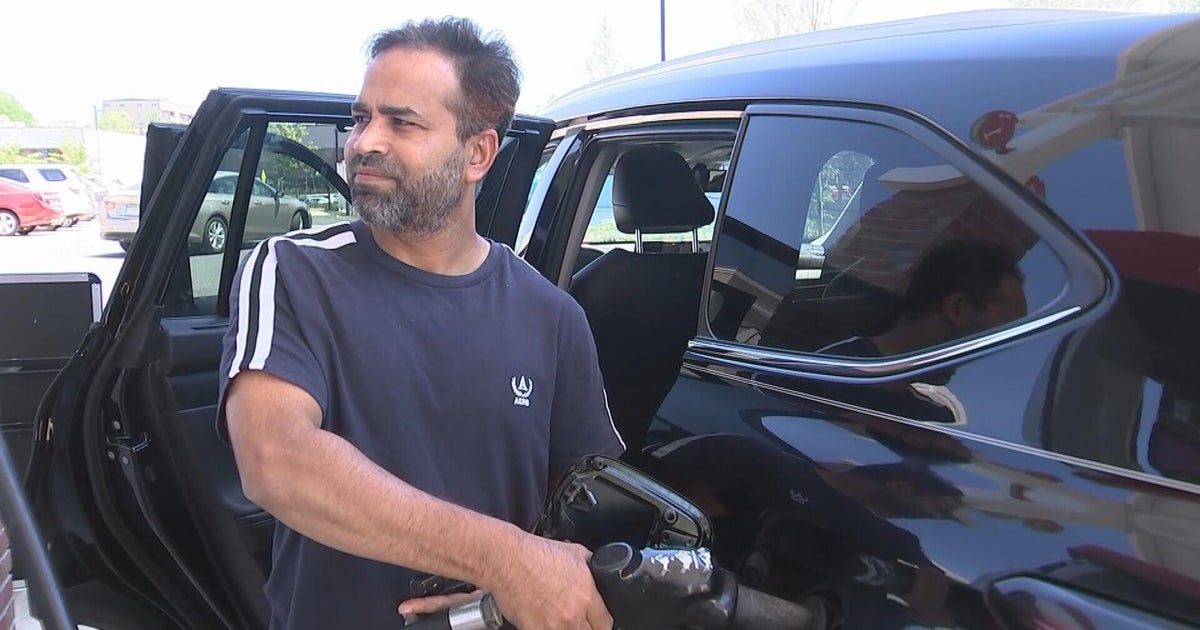
Shoppers pulled back on spending in April as higher gas prices fueled by the war meant less money left over for some nonessentials like clothing and furniture.
Retail sales rose 0.5% in April, a slowdown from the revised growth level of 1.6% in March, according to Commerce Department data released Thursday. March marked the largest one-month increase in retail spending in more than three years, largely because gas prices spiked higher rapidly.
Excluding gas sales, retail sales in April were up 0.3%. That's a slowdown from the 0.7% pace, excluding business from gas stations, in March.
Elsewhere in some areas, shoppers had tepid spending.
Sales at department stores fell 3.2%, while sales at furniture and home furnishings stores slipped 2%. Business at building material and garden equipment had a modest 0.1% increase. But online retailers saw a 1.1% increase and electronics and appliance stores posted a 1.4% sales gain.
Iran's foreign minister: Strait is open for commercial vessels "as far as we are concerned"
Iranian Foreign Minister Seyed Abbas Araghchi said Thursday that the Strait of Hormuz is open for commercial vessels "as far as we are concerned."
"The Strait of Hormuz is now suffering first and most from the U.S. aggression and the blockade that they have imposed on it," Araghchi said while at the BRICS foreign minister meetings in New Delhi on Thursday.
"As far as we are concerned, the Strait of Hormuz is open for all, you know, commercial vessels," he said. "But they need to cooperate with our navy forces. So we have not made any obstacles. It is Americans who have made blockade, and I hope that that could be ended by the removal of this illegal blockade imposed by Americans."
South Korea dispatches team to investigate attack on ship near Strait of Hormuz
South Korea has dispatched a technical team to Dubai to investigate an attack on a cargo ship near the Strait of Hormuz, according to Chosun Biz.
The Namu, run by HMM co., was struck by an unidentified missile on May 4 that exploded and left a seven-meter-deep gash in the ship's stern.
South Korean Defense Ministry spokesperson Lee Kyung-ho said officials dispatched a technical analysis team to Dubai on Wednesday that will "carry out detailed on-site investigations, analysis of various pieces of evidence, and cooperation with relevant countries to establish the exact facts, and will actively support the joint government response team's activities."
The team of about 10 personnel includes researchers from a state-run defense research institute ADD.
The Emirati and Korean governments both condemned the attack.
Bessent: "Very much" in China's interest to get Strait reopened
China will do what it can to reopen Strait of Hormuz, Bessent says
Treasury Secretary Scott Bessent said Thursday from Beijing, which he is visiting alongside President Trump, that it is very "very much" in China's interest to get the Strait of Hormuz reopened, "and I think they will be working with, behind the scenes, to the extent anyone has any say over the Iranian leadership."
"I think they're going to do what they can," Bessent told CNBC.
"The real problem here is ... we didn't change the regime, but the regime changed," he said. "Several layers of leadership were decapitated and it's very tough there just to communicate anything to anyone who is able to either act or get an overall agreement and speak on behalf of the Iranian leadership."
Tehran allows some Chinese vessels through Strait of Hormuz after talks, says semi-official news agency
Tehran has allowed some Chinese ships to pass through the Strait of Hormuz after discussions with China's foreign minister and ambassador, Iran's semi-official state news agency Fars reported Thursday.
Iran has been charging vessels for passage through the waterway. The report did not mention if the Chinese ships paid any money.
CBS News tracked crude oil tanker Yuan Hua Hu passing the strait laden with Iraqi oil Wednesday. That ship has not yet made it past the U.S. Navy presence off the coast of Oman but is moving along quickly toward China.
IRIB state TV reported Thursday that more than 30 ships had passed through the strait since Wednesday night "in coordination with our country's authorities and maritime agencies."
"With this, we can say that a new era has begun in the Strait of Hormuz," said an IRIB correspondent, "because now many sailors and countries of the world know that the best, fastest, and easiest way to pass through this very important and strategic waterway is only through coordination with the IRGC Navy."
Additionally, the UK MTO, a maritime agency, reported Thursday that a ship had been boarded and taken by "unauthorised personnel" while at anchor off the UAE's Fujairah coast area. It was headed for Iran, they said.
Iran says UAE "active partner" in U.S.-Israeli war
Iran's Foreign Minister Abbas Araghchi on Thursday accused the United Arab Emirates of playing an active role in the U.S.-Israeli war against his country.
"The UAE is an active partner in this aggression, and there is no doubt about it," Araghchi said in a Telegram post while attending a BRICS summit in India.
Araghchi also referred to a meeting in the UAE, during the war, between Prime Minister Benjamin Netanyahu and UAE President Mohammed bin Zayed Al Nahyan – a visit Israel described as "secret. " Abu Dhabi has denied any meeting took place.
"I must say that the UAE was directly involved in the act of aggression against my country. When this aggression began, they even refused to condemn it," Araghchi said.
"It also became clear that they participated in these attacks and may have even acted directly against us," he added.
Relations between Iran and the UAE have been strained since Feb. 28 when U.S.-Israeli attacks triggered Iranian retaliatory strikes against Israel and U.S. allies in the Gulf, including the UAE.
A fragile ceasefire has been in place since April 8.
Iran has repeatedly accused Gulf states of allowing U.S. forces to carry out attacks from their territory.
Gulf nations have repeatedly denied the accusations, saying even before the conflict that they would not allow their territory or airspace to be used to attack Iran.
Iranian state television has featured analysts alleging UAE involvement in the attacks on Iran.
The UAE earlier this month blamed Iran for a drone strike at an energy installation in its eastern emirate of Fujairah, a claim Iran denied.
Trump, Xi agree that the Strait of Hormuz "must remain open," White House says
President Trump and China's Xi Jinping met Thursday and agreed that the Strait of Hormuz "must remain open" and that Iran "can never have a nuclear weapon," according to the White House.
The Iran war had been slated to be one of the main topics of the highly-anticipated summit between Xi and Mr. Trump – Iran expressed publicly a desire for China to reiterate its terms for a possible peace deal with the U.S.
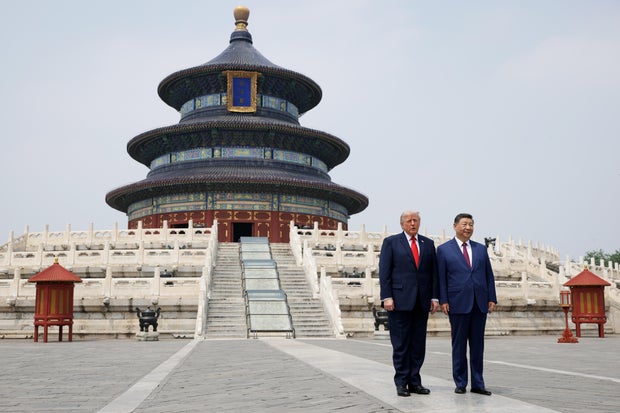
"The two sides agreed that the Strait of Hormuz must remain open to support the free flow of energy," read a White House readout of Thursday's meeting.
"President Xi also made clear China's opposition to the militarization of the Strait and any effort to charge a toll for its use, and he expressed interest in purchasing more American oil to reduce China's dependence on the Strait in the future. Both countries agreed that Iran can never have a nuclear weapon."
Prior to the meeting, Secretary of State Marco Rubio said on Fox News that "we've made clear to them that any support for Iran would obviously be detrimental for our relationship." He argued that China has an interest in resolving the Iran conflict's impacts on oil shipments, and "we hope to convince them to play a more active role."
The readout made no mention of Taiwan, though Chinese media are reporting that Xi raised the topic.
All crew safe thanks to Omani rescue after "unacceptable" attack on Indian ship Wednesday, says India's foreign ministry
The crew of an Indian-flagged vessel was the subject of an "unacceptable" attack off the coast of Oman Wednesday are safe thanks to a rescue from Omani authorities, according to the Indian foreign minister.
In a statement sent out Thursday, the country's Ministry of External Affairs wrote that the attack is "unacceptable and we deplore the fact that commercial shipping and civilian mariners continue to be targeted."
They did not say who was behind the attack.
"All Indian crew on board are safe and we thank the Omani authorities for rescuing," the bulletin added.
Israeli civilians wounded in Hezbollah drone strike, Israel's military says
A Hezbollah drone strike wounded several Israeli civilians on Thursday, the Israeli military said, hours before U.S.-brokered talks between Israel and Lebanon's government were set to begin in Washington.
"A short while ago, an explosive drone that was launched by the Hezbollah terrorist organization fell within Israeli territory, near the Israel-Lebanon border," the military said.
"As a result, several Israeli civilians were injured and evacuated to receive medical treatment at the hospital."
Israel's army says it's striking Hezbollah in southern Lebanon
Israel's military said it launched strikes against Hezbollah targets across southern Lebanon on Thursday, hours before U.S.-brokered talks between Israel and Lebanon's government were set to begin in Washington. Hezbollah is a major Iran-backed paramilitary group.
"The IDF (Israel Defense Forces) has begun striking Hezbollah terror infrastructure sites in several areas in southern Lebanon," the military said after issuing evacuation warnings for a number of villages in the area.
CBS/AFP
Vessel seized off UAE coast, now bound for Iran waters, U.K. agency says
A ship has been "taken" by unknown parties off the UAE coast near the Strait of Hormuz and is headed toward Iranian waters, a U.K. maritime agency said Thursday.
The vessel was "taken by unauthorized personnel whilst at anchor" 38 nautical miles northeast of Fujairah and "is now bound for Iranian territorial waters," according to the United Kingdom Maritime Trade Operations center.
Several ships have been attacked in or near the key waterway as Iran and the United States push on with rival blockades.
Iran has largely blocked shipping through the strait -- which normally carries one-fifth of the world's oil and LNG shipments -- since the outbreak of war with the United States and Israel on February 28.
The U.S. has imposed its own naval blockade on Iranian ports despite a fragile ceasefire in place since April 8.
On Sunday, South Korea said a cargo ship had been struck by unidentified aircraft in Hormuz, while Qatar said a freighter arriving in the country's waters from Abu Dhabi was hit by a drone.
UAE denies Netanyahu visited
Israeli Prime Minister Benjamin Netanyahu's office said Wednesday that he quietly visited the United Arab Emirates during the Israeli-U.S. war with Iran. But the UAE later denied any secret visit had occurred.
Netanyahu met with UAE President Sheikh Mohammed bin Zayed Al Nahyan in a gathering that "resulted in a historic breakthrough in relations between Israel and the United Arab Emirates," according to the Israeli statement. The Gulf nation normalized relations with Israel in 2020.
The UAE's official WAM news agency later posted an article denying "reports circulating" about a Netanyahu visit. According to WAM, the country's relations with Israel "are public and conducted within the framework of the well-known and officially declared Abraham Accords, and are not based on non-transparent or unofficial arrangements."
The Emirati report also denied any Israeli military delegation was received in the UAE.
Trump meets with Chinese leader Xi in Beijing
President Trump and Chinese President Xi Jinping met in Beijing on Thursday morning local time, as the two countries aim to stabilize their trading relationship and grapple with uncertainty over the United States' war with Iran.
Some experts argue the U.S.'s focus on the Middle East — including the munitions it has used in Iran — could make it more difficult to prepare for a potential confrontation with China.
At the same time, China imports large amounts of oil from the Middle East and is the world's largest purchaser of Iranian oil, meaning China is both sensitive to the war's dire impacts on the global oil trade and key to supporting Iran's economy.
Prior to the meeting, Secretary of State Marco Rubio said on Fox News that he expects Iran to come up in talks with Chinese officials, and that "we've made clear to them that any support for Iran would obviously be detrimental for our relationship." He argued that China has an interest in resolving the Iran conflict's impacts on oil shipments, and "we hope to convince them to play a more active role."
Rubio says it is in China's interest to resolve war with Iran
On the way to the summit between President Trump and Chinese President Xi Jinping, Secretary of State Marco Rubio told Fox News it is in China's interest to help resolve the war with Iran.
"We hope to convince them to play a more active role in getting Iran to walk away from what they're doing now and trying to do now in the Persian Gulf," Rubio said aboard Air Force One.
Rubio argued that China's economy is driven by its exports, saying people will be buying fewer Chinese products "because of this crisis in the Strait."
Mr. Trump told reporters in the Oval Office last week that he and Xi will "be talking about" Iran, but said Xi has "been very nice about this," considering how much of China's oil supply comes through the Strait of Hormuz.
China is the world's largest buyer of oil that comes through the strait, although it keeps its own reserves.
Kathryn Watson contributed to this report.
Washington set to host new Israel-Lebanon peace talks as ceasefire nears end
Lebanon and Israel are set to hold new peace talks in Washington starting Thursday, as their latest ceasefire — considered to still be in place despite hundreds of deaths in Israeli strikes — nears its end.
The two countries last met on April 23 at the White House, where President Trump announced a three-week ceasefire extension and voiced optimism for a historic agreement.
Mr. Trump at the time made the bold prediction that within the latest ceasefire period, he would welcome Israeli Prime Minister Benjamin Netanyahu and Lebanese President Joseph Aoun to Washington for a historic first summit between the countries.
The summit did not happen, with Aoun saying a security deal needed to be in place and Israeli attacks needed to end before such a landmark symbolic meeting.
Citing Lebanese sources, Qatari al-Araby Aljadeed reported that Lebanon's delegation was instructed by Mr. Aoun to prioritize securing a full ceasefire and stopping Israeli demolition operations before discussing other issues. Lebanon also wants Israeli withdrawal from occupied Lebanese areas, prisoner releases, the return of displaced residents, and stronger Lebanese army deployment along the border.
The ceasefire had been extended through Sunday. Since it first went into effect on April 17, Israeli strikes have killed more than 400 people, according to an AFP tally based on figures from Lebanese authorities.
CBS/AFP
U.S. military says it has allowed 15 ships "supporting humanitarian aid" to pass through since blockade on Iran
Since a blockade of Iranian ports began, the U.S. military has allowed 15 merchant vessels "supporting humanitarian aid" to pass through, U.S. Central Command said in a social media post Wednesday.
They include both merchant ships allowed to dock in Iranian ports, as well as ships that were allowed to sail out of Iranian ports and into open waters, said Capt. Tim Hawkins, a spokesperson for the command.
The social media post noted that since the blockade began on April 13, U.S. forces have redirected 67 commercial vessels and disabled four more "to ensure compliance" with the restrictions.