Michigan's air quality worsening from Canadian wildfire smoke


Smoke from multiple wildfires in Canada and Minnesota has begun moving over Michigan, rapidly degrading air quality across the state due to elevated levels of fine particulate matter.
In response to the conditions, the Michigan Department of Environment, Great Lakes and Energy has extended an Air Quality Alert for all of Michigan that was initially issued just for Wednesday into Thursday, possibly continuing into Friday, citing a "persistent and aggressive" nature of the wildfires.
"The air quality is worsening up north at a rapid rate, and to a much larger extent, and ash fall has begun in the UP," CBS Detroit chief meteorologist Ahmad Bajjey said Wednesday. "Smoke should reach Southeast Michigan by Wednesday evening and continue in hazardous bursts through Thursday night."
The smoky haze was visible on the traffic cameras at the Mackinac Bridge on Wednesday morning.
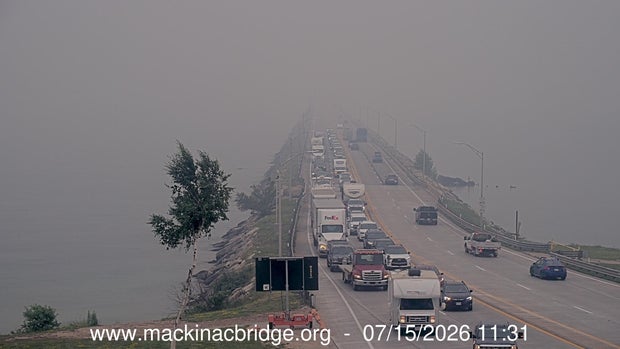
The Mackinac Bridge Authority issued a travel alert at 11:23 a.m. on Wednesday, saying that all motorists crossing the bridge should reduce speeds to 20 mph and turn on their low-beam headlights while making the crossing. "Additional steps will be implemented if conditions change," the travel alert said.
The bridge's travel alert was lifted by 2:15 p.m. But northern Michigan communities were still noticing the impacts.
"This is the worst we've seen in recent years," Michigan Republican Sen. John Damoose, of Harbor Springs, said in a social media post on Wednesday afternoon. Damoose represents District 37, which includes Cheboygan, Petoskey and Sault Ste. Marie.
As the environmental conditions worsen, EGLE says pollutants are expected to range from the "unhealthy for sensitive groups" range in Southern Lower Michigan to "unhealthy" in Northern Michigan. The air quality readings, which are updated hourly, might even show "very unhealthy" to "hazardous" at times due to smoke plumes, especially in the northern part of the state.
When air quality reaches unhealthy levels for sensitive groups, those most likely to be affected include children, older adults, and people with asthma, heart disease, or other respiratory conditions.
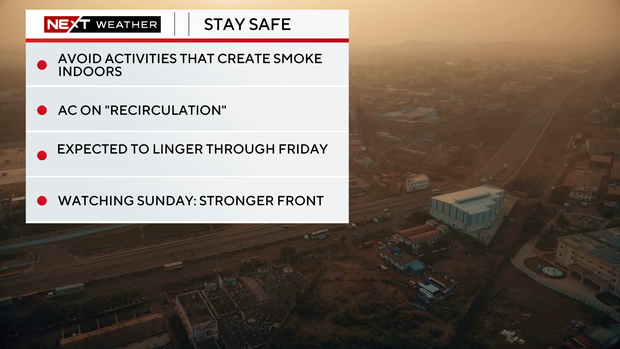
Those individuals should limit prolonged or strenuous outdoor activity, keep windows closed if possible, and use air conditioning with a clean filter or an air purifier to reduce smoke indoors. Anyone who experiences coughing, shortness of breath, or chest discomfort should move indoors and seek medical attention if symptoms become severe.
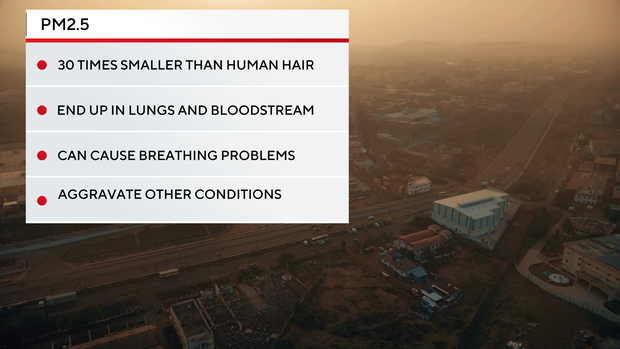
But as conditions worsen, air quality could reach unhealthy levels, potentially reaching very unhealthy or hazardous levels.
The American Heart Association says exposure to wildfire smoke can contribute to an increased risk for heart disease.
While air quality alerts are occasionally issued during the summer months in Michigan, they are typically limited to a specific region and are driven by local weather conditions. But it can happen that wildfire smoke spreads across a wider area. A statewide air quality alert, for example, was issued in late July 2025 for Michigan because of Canadian wildfire smoke. The 2023 Canadian wildfires also had an impact on Michigan's air quality.
The Mackinac Bridge carries Interstate 75 over the Straits of Mackinac, connecting Michigan's two peninsulas. Michigan Department of Transportation traffic reports are available on the MI Drive site.