Denver apartment complex manager experiences "apocalyptic situation" with state voucher tenants

The people running a family-owned apartment complex in Congress Park/Capitol Hill are hoping to shed light on an issue impacting their business and their lives. They believe they aren't the only property owners facing this same story.
It was a shocking scene inside one of the Denver apartments: drug paraphernalia, feces, and garbage. Christina Eisenstein invited CBS News Colorado into the newly vacated unit.
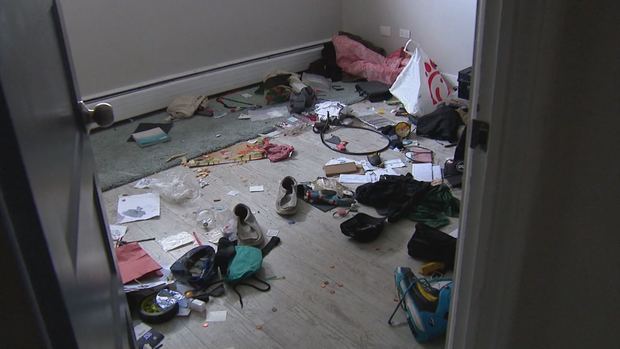
Her mother-in-law owns the apartment complex called the White Swan, at 1300 Adams St. She took over managing the property back in September, and a few weeks later reached out to CBS Colorado for help.
"It's been an apocalyptic situation for my family," said Eisenstein.
She's highlighting what she calls a long and costly journey with tenants placed by the Community Economic Defense Project. The previous property management company allowed CEDP to place clients in five of the 18 units. Concerns of health and safety followed, which she says she presented to them.

"I would get emails from tenants describing the horrors that they have to endure as paying tenants, as taxpayers, as working citizens of Denver. I would hear about the horrors that they had to endure. I would bring these actual emails, emails from their email, not something I created, not something I invented in my head."
The CEDP helps renters who receive vouchers from the state. The voucher programs help people who can't afford housing due to circumstances, including homelessness, a disabling condition, and extremely low income. However, participants must meet certain requirements and follow lease rules.
Eisenstein says she expressed concerns to CEDP about several issues, including drug use, which violates the tenant's housing voucher contract: "The Economic Defense just blew it off and said, Oh, it's hearsay."
The CEDP is one of 44 organizations that administers voucher programs in Colorado. The state says it pays CEDP an average of $36,000 per month in administrative fees. CEDP is expected to act as a liaison between landlords or property management and households to assist with conflict resolution. They declined an interview but provided CBS Colorado with this statement:
"As a nonprofit administering public programs, we prioritize health and safety, but we need timely, verified information to assess any claims and take action. Over the past two months, Christina Eisenstein has refused to promptly and formally document her allegations, making it impossible for our team to respond to her concerns. Programs that serve vulnerable Coloradans only work when everyone engages in good faith."
However, Eisenstein says she sent many emails, phone calls, and even invited CEDP to the property to review surveillance video from cameras she had installed to document safety risks posed by their clients.
"I was hoping for a partnership, and what I've experienced from their emails is just a denial of what we're seeing," said Eisenstein.
We spoke with several tenants who asked to keep their identities concealed; all expressed concern for their safety living next to tenants placed by CEDP.
"We would have people knocking and jiggling our door handle over the summer, (it) was really bad," said one tenant. "It's been a lot of, like, noise issues and complaints. Definitely domestic violence, we've called the police on them a few times."
Eisenstein also shared documents with CBS Colorado showing multiple apartments with CEDP clients who tested positive for meth during a preliminary assessment after they moved out. The cost for testing and remediation, she says, is tens of thousands of dollars per unit.
"We have to take the building down to the studs, and then that just takes apartments off the market," said Eisenstein.

Out of the 5 units that had CEDP clients in them, two now remain. However, Eisenstein says one is under active eviction for suspected drug use, noise violations, and unauthorized guests.
When asked what she hopes to get out of sharing her story, she responded, "My dream for this is for more insight and more thoughtfulness to go into true programs to support the audience that it claims to support. I think that there needs to be a situation with true wrap-around services."


