Watch Live: Lindsay Clancy murder trial heads to closing arguments in Massachusetts courtroom

What to know about the Lindsay Clancy murder trial today:
- Closing arguments are being presented in Lindsay Clancy's murder trial following 21 days of testimony in Massachusetts.
- Clancy has pleaded not guilty to charges of first-degree murder in the deaths of her children — 5-year-old Cora, 3-year-old Dawson and 8-month-old Callan. The prosecution argues Clancy planned the murders and has suggested that her subsequent suicide attempt was not serious. The defense says she should not be held accountable because she was overmedicated and suffering from postpartum psychosis.
- Clancy faces life in prison without the possibility of parole if convicted of first-degree murder. She will be sent to a state psychiatric hospital in Massachusetts if she is found not criminally responsible.
Lindsay Clancy "owned what she did," lawyer says
Reddington continued to bring up Clancy's medical treatment in his closing argument, specifically her first psychiatrist, Dr. Jennifer Tufts.
"This woman lived for her kids until she had the pleasure of running into Dr. Tufts with two months of experience," Reddington said. "After Dr. Tufts, it was not a wonderful life anymore."
He also went after the prosecution's rebuttal witnesses for not interviewing Clancy until three years after the murders. He said she was friendly and answered all their questions.
"She owned what she did. She never ran from anything," Reddington said.
Judge interjects during Reddington's closing
Jurors looked very serious, their eyes locked in on Reddington as he talked about the injuries Clancy suffered from her suicide attempt after the murders.
"Why did we spend almost a week showing you the extent and severity of that suicide attempt?" Reddington said. "The reason we had to do that is because they were arguing that it was a fake suicide. Dinky little cuts."
Reddington was briefly interrupted by Judge Sullivan as he turned to prosecutor Jennifer Sprague and said he challenged her to tell the jury why this "wasn't a serious suicide attempt."
"Counsel, address the jury," Sullivan said.
Kevin Reddington begins closing argument
Defense attorney Reddington began his closing argument by thanking jurors for their service. He said the prosecution has "ripped the soul out of this girl," referring to Clancy.
He showed pictures of the Clancy's looking like a happy family and asked how the children ended up dead.
"Because of damn medicine and the lousy medical care that she got," Reddington said.
He said the prosecution has suggested that Clancy killed Dawson first because she didn't like him.
"That is repulsive," he said.
Lindsay Clancy cries during jury instructions
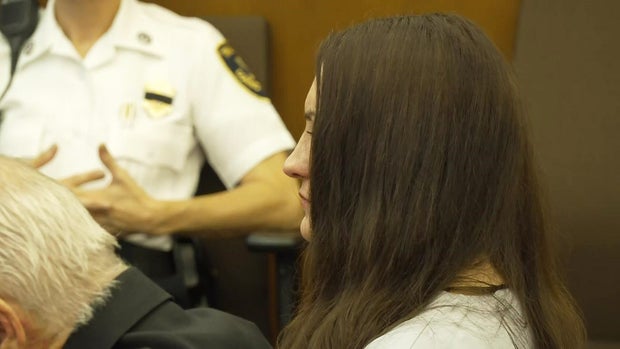
Lindsay Clancy started to cry as the judge explained to jurors how she is charged with causing the deaths of her three children.
She used a tissue to wipe her tears and took deep breaths while the judge detailed what's necessary to prove a first-degree murder conviction.
Is Lindsay Clancy criminally responsible?
Judge Sullivan explained to the jury that a defendant cannot be held criminally responsible if they have a mental disease or defect and because of that, they cannot appreciate the wrongfulness of their conduct or conform it to the requirements of the law.
In Massachusetts, the prosecution has the burden to prove a lack of mental disease in the defendant.
"The commonwealth must prove that the defendant knew and understood that her conduct was illegal or wrong," Sullivan said.
Judge reading instructions to jury
Judge William Sullivan explained to the jury how this final phase of the trial will unfold.
He will give the jurors the first half of his jury instructions, detailing the specific charges against Clancy.
Then closing arguments will happen, with each side getting an hour to make their case.
After, Sullivan will give general jury instructions before sending them to deliberate.
Lindsay Clancy trial day 22
Lindsay Clancy was brought into the courtroom in her wheelchair at 9:24 a.m. She's wearing a powder blue blouse. She's not wearing glasses today.
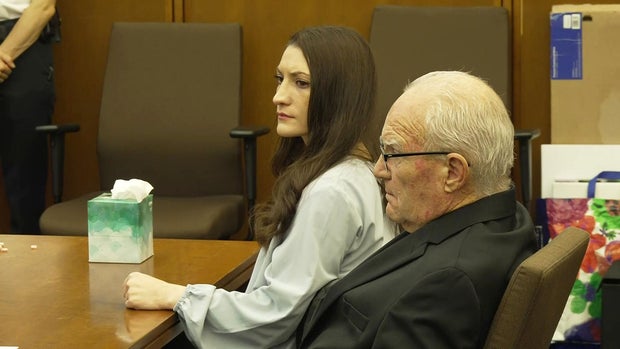
Everyone but the judge and jury were in place at 9:25 a.m. The courtroom is full. There are six rows of media, four rows of the general public, 1.5 rows for the district attorney's staff and police and two rows on the other side of the room for some court staff, Clancy's family and friends of Kevin Reddington.
The court is absolutely silent. Court officers have asked people in the gallery to keep movement to a minimum during closings.
Prosecutors Jennifer Sprague and Shanan Buckingham walked into court at 9:09 a.m. for the 22nd day of Clancy's trial. They have 11 additional people with them including victim witness advocates and some police officers.
Clancy's defense attorney Kevin Reddington then went into the hallway and pulled a few members of the general public into court with him.
I saw him speaking with the same women in the parking lot Wednesday, telling them he would get them into the courtroom.
Registered media were welcomed into the courtroom at 9:16 a.m.
Plymouth County District Attorney Timothy Cruz entered the courtroom at 9:19 a.m. He was here at the beginning of trial as well, but otherwise has not been in the courtroom, except one other appearance in the middle of trial.
Lindsay Clancy trial live stream
You can watch closing arguments in Lindsay Clancy's murder trial when court is in session, just after 9 a.m.
They will be streamed live from Plymouth Superior Court on CBS News Boston and on YouTube.
Lindsay Clancy's parents in court
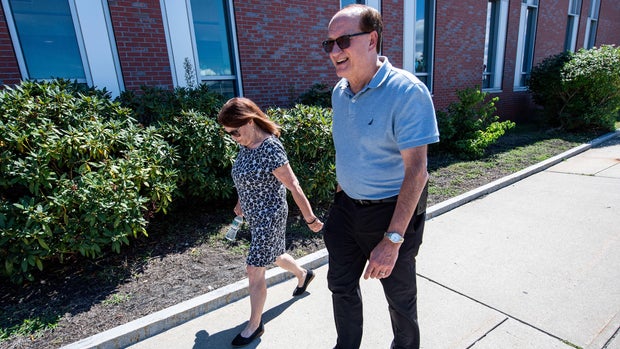
Lindsay Clancy's parents, Michael and Paula Musgrove, entered the courtroom just before 9 a.m.
Before they went in, they spoke with Bob Jones, the private investigator for Lindsay Clancy's defense attorney Kevin Reddington.
There are more than 50 media members and 60+ members of the general public in line waiting to get into the courtroom. All of these people will likely not fit inside.
Inside Plymouth Superior Court
We are not allowed to take pictures inside the courthouse.
As of 8:43 a.m., the media and members of the public have naturally formed two lines right outside of the courtroom and are starting to fill the hallway.

Lindsay Clancy's attorney draws a crowd
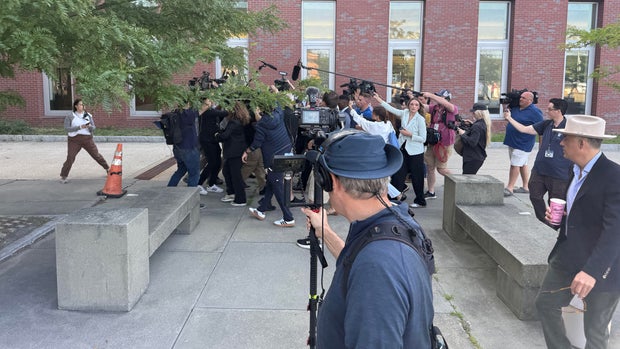
Lindsay Clancy's defense attorney Kevin Reddington walked into court surrounded by a massive media scrum Thursday morning.
A member of the public yelled from line, "Good luck, Mr. Reddington!"
The courthouse opened at 8:32 a.m. and members of the public and media started to go through security.
Lindsay Clancy trial crowd
As of 8:10 a.m., there were more than 90 people in line waiting to get into the courthouse in Plymouth, Massachusetts.
This is a mix of media members and the general public. I would say the split is about 60% media, 40% general public.

Some people have brought their children here and have lawn chairs to wait in line.
A few members of the public are wearing pink as a tribute to Lindsay Clancy. I see some familiar faces in the public who were in court Wednesday as well.

Lindsay Clancy's attorney expects "fireworks" in closing argument
When court ended for the day on Tuesday, Lindsay Clancy's defense attorney Kevin Reddington was asked by WBZ-TV's Aaron Parseghian what to expect from his closing argument.
"Fireworks," Reddington said. "I don't know what I'm going to say until I say it. I don't write them out, I don't type them out. I don't run them by anybody. I just say what comes to my mind."
What sentence is Lindsay Clancy facing?
If convicted of first-degree murder, Lindsay Clancy faces life in prison without the possibility of parole.
Clancy could also be found guilty of lesser charges, including second-degree murder or manslaughter.
If the jury decides she was not criminally responsible for the deaths of her children, she will be sent to a state psychiatric hospital in Massachusetts.
The jury could also reach a straight not guilty verdict. That is highly unlikely though because her attorney said Clancy admits killing her children and he has not presented any evidence that she didn't do it.
Who is the judge in Lindsay Clancy's trial?
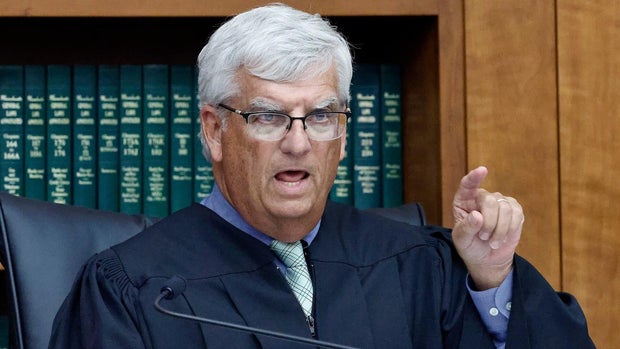
Judge William Sullivan is overseeing the trial in Plymouth Superior Court in Plymouth, Massachusetts.
During the final days of the trial, Sullivan was asked to declare a mistrial after a prosecution witness began discussing Lindsay Clancy's religious beliefs. The judge denied the defense's request for a mistrial, but he reprimanded the prosecution and later told jurors they should not consider the testimony.
Lindsay Clancy trial attorneys
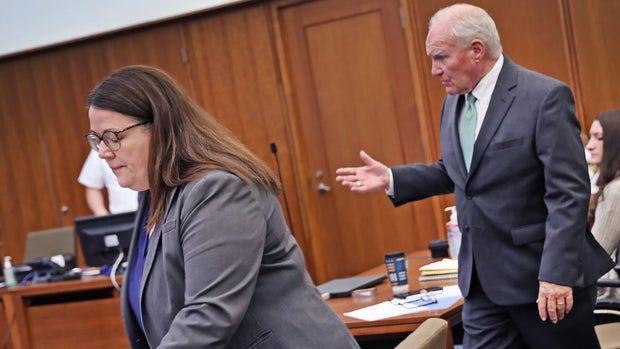
The Plymouth District Attorney's office is prosecuting the case against Lindsay Clancy.
Jennifer Sprague and Shanan Buckingham handled the questioning of witnesses throughout the trial.
For the defense, Kevin Reddington is representing Clancy.
What is postpartum psychosis?
A key question in Clancy's trial is whether postpartum psychosis drove her to kill her three children.
The disorder is rare, estimated to afflict only 1 to 2 per 1,000 women after delivery.
Experts at the Cleveland Clinic describe it as a mental health emergency affecting someone's sense of reality. It can happen to anyone after giving birth, but the chances are higher for people with certain mental health conditions.
Perinatal psychiatrist Dr. Uruj Kamal Haider said on "Healthful" with Norah O'Donnell that postpartum psychosis is "a break from reality" where "the brain cannot properly process information," characterized by delusions, hallucinations and confusion. Dr. Haider said the delusions are "fixed false beliefs that tend to revolve around the baby."
Postpartum psychosis is a psychiatric emergency where the mother must be sent to the hospital and the baby put into a safe place as soon as possible. But Dr. Haider emphasized that "with adequate and prompt treatment, most of these women go on to recover and have wonderful, beautiful lives with their family."
Mental health resources
If you or someone you know is in emotional distress or a suicidal crisis, you can reach the 988 Suicide & Crisis Lifeline by calling or texting 988. You can also chat with the 988 Suicide & Crisis Lifeline here.
For more information about mental health care resources and support, The National Alliance on Mental Illness HelpLine can be reached Monday through Friday, 10 a.m.–10 p.m. ET, at 1-800-950-NAMI (6264) or email info@nami.org.